

Breathable Long Sleeve Fishing Shirts: 2026 Guide
Table of Contents
- What Makes Long Sleeve Fishing Shirts Actually Breathable
- UPF 50 Fishing Shirts: Sun Protection Ratings Explained
- Vented Fishing Shirts: How Airflow Design Changes Everything
- Best Fishing Shirts for Hot Weather: Top Picks Reviewed
- Saltwater vs. Freshwater Durability: What to Look For
- Sustainable and Recycled Materials in Long Sleeve Fishing Shirts
- Size, Fit, and Layering: Getting the Most from Your Fishing Shirt
- Conclusion
Last Updated: August 6, 2026
Spending a full day on the water in August heat tests your gear. The right breathable long sleeve fishing shirts keep you cool, block the sun, and stay comfortable from the first cast to the last. This guide breaks down what separates performance fishing apparel from marketing fluff, reviews the top shirts on the market, and gives you a practical framework for choosing the best fit for your style of fishing.
What Makes Long Sleeve Fishing Shirts Actually Breathable
A breathable long sleeve fishing shirt actively moves heat and moisture away from your skin rather than trapping it. Breathability comes down to three factors: fabric construction, treatment chemistry, and physical design. Synthetic fibers, particularly polyester blends, dominate because they resist absorbing moisture. Unlike cotton, which holds sweat against your skin, quality polyester blends wick moisture to the outer surface where it evaporates quickly.
Strategic ventilation, ergonomic construction, and four-way stretch all contribute to airflow around your body during activity. A shirt that fits well and allows full range of motion creates less friction and heat buildup during repetitive casting motions.
Moisture-Wicking and Quick-Drying Fabric Technology
Moisture-wicking fabric draws sweat away from the skin through capillary action in the weave. The moisture spreads across a larger surface area on the outside of the fabric, where it evaporates faster than sitting against your skin. Quick-drying performance goes hand in hand with moisture management. Fabrics with a tight, fine weave and low moisture absorption dry significantly faster than heavier materials. Some shirts combine a hydrophobic outer finish with an inner weave designed to pull moisture outward, creating a one-way moisture management system.
A common mistake is assuming lightweight fabric automatically means better breathability. Thread count, weave density, and fiber type all interact. A loosely woven mid-weight polyester can outperform a tightly woven ultralight fabric in real fishing conditions.
Anti-Microbial and Odor Control Treatments
After a long day handling bait and fish, odor control becomes a real priority. Anti-microbial treatments work by inhibiting the growth of odor-causing bacteria on the fabric surface. Most treatments are applied during manufacturing and last through many wash cycles.
The AFTCO Samurai Long Sleeve Sun Protection Shirt includes antimicrobial treatment alongside moisture-wicking and quick-dry technology. Antimicrobial treatments degrade faster with fabric softener or bleach. Washing in cold water and air drying extends treatment life considerably.
UPF 50 Fishing Shirts: Sun Protection Ratings Explained
UPF 50+ fishing shirts block at least 98% of the sun's UV radiation from reaching your skin. According to the Skin Cancer Foundation's guidance on sun-protective clothing, a UPF 50 garment allows only 1/50th of the UV radiation to pass through the fabric, making it one of the most effective forms of sun protection available.
For anglers spending extended time on open water, this matters enormously. Water reflects UV radiation, which means your exposure is higher on a boat than on land under the same sun conditions.
UPF 30 vs. UPF 50+: Which Rating Do You Actually Need
UPF 30 blocks roughly 97% of UV radiation. UPF 50+ blocks 98% or more. On a full day of fishing in direct sun with water reflection amplifying exposure, that gap adds up.
Most serious fishing shirts now carry UPF 50+ ratings. The Simms SolarFlex Guide Cooling Hoody, Huk Icon X, Pelagic VaporTek, Under Armour Iso-Chill Shore Break, and AFTCO Samurai all hit UPF 50 or UPF 50+. The Grundéns Deck Hand is the notable exception at UPF 30, which is adequate for moderate sun exposure but falls short for all-day offshore or flats fishing. If you're fishing more than four hours in direct sun, especially on open water, choose UPF 50+ without compromise.
Stain-Resistant and Hydrophobic Fabric Treatments
Fishing is messy. Blood, bait, fish slime, and sunscreen all find their way onto your shirt. Stain-resistant and hydrophobic fabric treatments create a barrier that causes liquids to bead and roll off rather than soaking into the fibers.
The Pelagic VaporTek stands out with its PFAS-free (C0) water and stain repellent finish. Traditional DWR (durable water repellent) treatments have historically used PFAS chemicals, which the EPA has flagged as persistent environmental contaminants. PFAS-free alternatives deliver comparable performance without the environmental concern.
Vented Fishing Shirts: How Airflow Design Changes Everything
Physical ventilation separates a truly breathable shirt from one that just uses breathable fabric. Vented fishing shirts use strategic mesh panels, back vents, and open-weave zones to create airflow that no fabric technology alone can replicate.
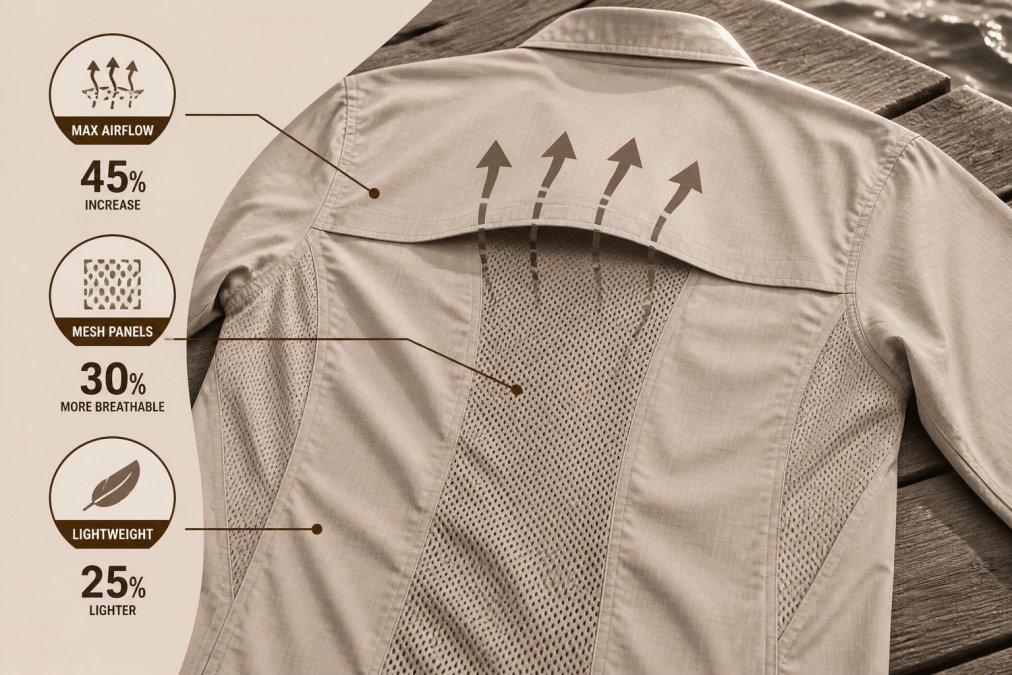
On a still, humid day when there's no breeze, a shirt with good ventilation creates its own microclimate by allowing body heat to escape through the back and underarms. Without physical venting, even the best moisture-wicking fabric can only do so much when the air isn't moving.
Vented Back Panels and Strategic Ventilation Placement
Vented back panels are the most common ventilation feature in performance fishing shirts. They're typically placed across the upper and lower back, where heat accumulates most during active use. Some designs add underarm gussets or side panels to increase airflow during casting motions.
The Pelagic VaporTek places vents where they benefit active anglers most. Ventilation placement matters as much as ventilation quantity. A single well-placed mesh panel across the upper back delivers more comfort than multiple small vents in low-heat areas.
Long Sleeve vs. Short Sleeve: Which Wins on the Water
Long sleeve fishing shirts win for serious sun protection, full-day comfort, and saltwater conditions. A UPF 50+ long sleeve shirt covers more skin than any combination of sunscreen and short sleeves. Sunscreen wears off, especially when you're sweating and handling fish. A long sleeve shirt doesn't.
Many anglers who switch to long sleeve UPF shirts report using significantly less sunscreen and experiencing fewer sunburns. A well-designed long sleeve fishing shirt in a lightweight polyester blend with venting and moisture management runs cooler in practice than a cotton short sleeve shirt on a hot day.
Best Fishing Shirts for Hot Weather: Top Picks Reviewed
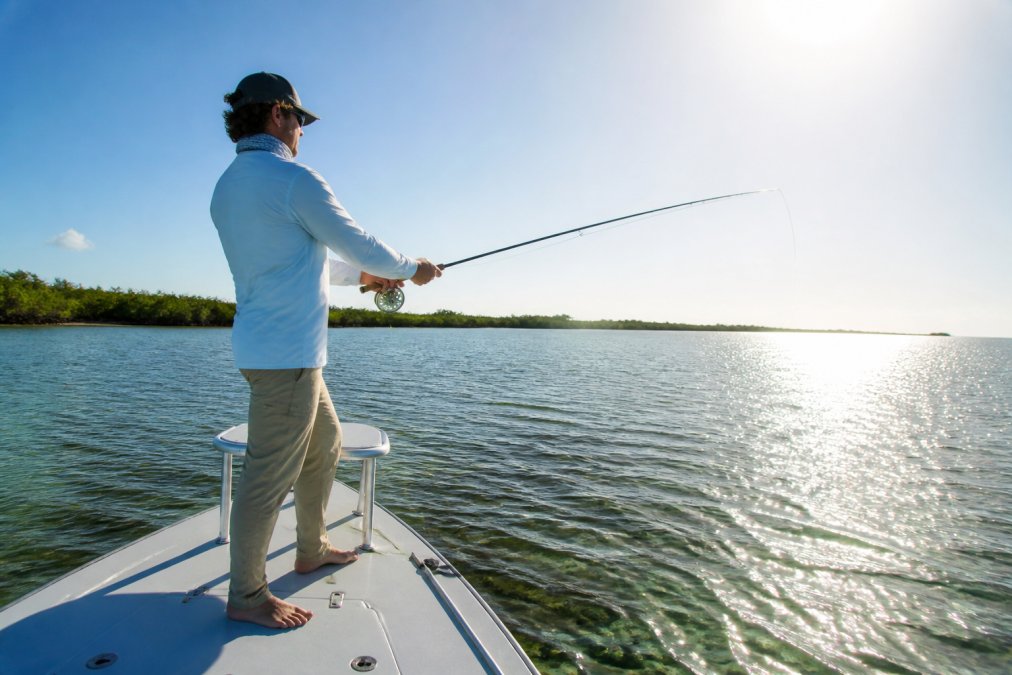
The best fishing shirts for hot weather combine UPF 50+ protection, active moisture management, physical ventilation, and a fit that allows full range of motion.
Quick Picks:
- Best Overall: AFTCO Samurai, comprehensive features at a reasonable price point
- Best Cooling Technology: Huk Icon X, I.C.E. technology for extreme heat
- Best for Sun Coverage: Simms SolarFlex Guide Cooling Hoody, integrated hood and gaiter
- Best Eco Option: Pelagic VaporTek, 100% recycled polyester, PFAS-free finish
- Best Budget Entry: Columbia PFG Terminal Tackle, solid UPF 50 at an accessible price
Performance Shirt Comparison: Features at a Glance
| Shirt | UPF Rating | Key Cooling Feature | Stain/Water Resistance | Stretch | Best For |
|---|---|---|---|---|---|
| AFTCO Samurai | UPF 50 | AFCOOL quick-dry | AFGUARD stain resistance | Standard | All-around fishing |
| Huk Icon X | UPF 50+ | I.C.E. active cooling | Hydrophobic coating | Yes | Extreme heat |
| Simms SolarFlex Hoody | UPF 50+ | brrr° triple effect | Standard | Yes | Max sun coverage |
| Pelagic VaporTek | UPF 50+ | Strategic ventilation | PFAS-free DWR | 4-way | Eco-conscious anglers |
| Under Armour Iso-Chill | UPF 50+ | Iso-Chill heat dispersal | Standard | Articulated | Casual to active |
| Columbia PFG Terminal | UPF 50 | Omni-Wick | Standard | Raglan sleeves | Budget-conscious |
| Grundéns Deck Hand | UPF 30 | COOLCORE cooling | Standard | 4-way | Freshwater, moderate sun |
| Salt Life Performance | UV 50 | Moisture-wicking | Standard | Standard | Coastal lifestyle |
AFTCO Samurai Long Sleeve Sun Protection Shirt hits the sweet spot for most anglers. It combines UPF 50, AFCOOL quick-dry technology, moisture-wicking fabric, AFGUARD stain resistance, and antimicrobial odor control in a single package at an accessible price.
Huk Icon X Long Sleeve Shirt is the pick for anglers who fish in brutal heat. The Internal Cooling Element technology actively cools upon contact with moisture, and the hydrophobic coating moves sweat away from the skin efficiently.
Simms SolarFlex Guide Cooling Hoody is the premium option for maximum sun coverage. The integrated hood, face gaiter, and thumbhole cuffs cover every exposed surface for offshore days when you're fully exposed for eight or more hours.
Pelagic VaporTek Long Sleeve Shirt earns its place as the standout eco option. Made from 100% recycled polyester with a PFAS-free water and stain repellent finish, it delivers UPF 50+, four-way stretch, and strategic ventilation without environmental compromises.
Columbia PFG Terminal Tackle remains the most accessible entry point. Omni-Shade UPF 50 and Omni-Wick moisture management cover the essentials at a lower price.
Saltwater vs. Freshwater Durability: What to Look For
Saltwater conditions are harder on fishing shirts than most anglers expect. Salt crystals embedded in fabric after drying degrade fibers over time, and abrasion from boat hardware, rods, and tackle is constant. For saltwater use, prioritize shirts with hydrophobic coatings that resist salt absorption, reinforced seams at high-stress points, and colorfast dyes. According to the American Academy of Dermatology's guidance on protective clothing, UPF ratings can degrade when fabric is stretched, wet, or worn over time, which makes fabric quality particularly important for long-term saltwater use.
For freshwater fishing, durability requirements are more forgiving. Four-way stretch fabrics like those in the Pelagic VaporTek and Grundéns Deck Hand hold up well to the bending and reaching involved in stream fishing or kayak angling.
Sustainable and Recycled Materials in Long Sleeve Fishing Shirts
The fishing apparel category has moved toward sustainable materials. The Pelagic VaporTek is the clearest example: 100% recycled polyester with a PFAS-free water repellent finish. That combination addresses both the raw material footprint and the chemical treatment concerns that have plagued performance outdoor apparel.
Recycled polyester performs comparably to virgin polyester in technical applications. The fiber characteristics, moisture management behavior, and durability are essentially equivalent. The environmental difference is in production: recycled polyester uses significantly less energy and water than virgin polyester manufacturing and diverts plastic waste from landfills and oceans.
PFAS-free DWR treatments are a meaningful step forward. Traditional fluorocarbon-based DWR treatments are effective but persistent in the environment. PFAS-free alternatives achieve water repellency without the same environmental persistence.
Size, Fit, and Layering: Getting the Most from Your Fishing Shirt
Getting the fit right on a fishing shirt matters more than most guides acknowledge. A shirt that's too tight restricts your casting motion. One that's too loose catches wind and adds bulk under a rain jacket or waders.
Size and Fit Accuracy: Athletic Fit vs. Relaxed Cut
Athletic fit fishing shirts sit closer to the body and work well for active fishing styles. They layer cleanly under waders or a rain shell and don't bunch up during casting. Relaxed cut shirts offer more freedom of movement and tend to run more forgiving across the chest and back. They're the better choice for anglers who prioritize comfort or run warm and want more air circulation.
If you're between sizes on a fishing shirt, size up rather than down. A slightly larger shirt allows better arm movement during casting and layers more comfortably over a base layer in cooler conditions.
Layering Guide for Variable Weather on the Water
Variable weather is the norm for serious fishing. A morning that starts at 55°F can hit 85°F by noon, and an afternoon storm can drop temperatures again within minutes.
| Condition | Base Layer | Mid Layer | Outer Layer |
|---|---|---|---|
| Hot and sunny (80°F+) | UPF 50+ fishing shirt alone | None | Sun hoody or buff for face/neck |
| Warm with morning chill (60-75°F) | Lightweight moisture-wicking base | UPF fishing shirt | None |
| Variable (50-75°F) | Moisture-wicking base | UPF fishing shirt | Packable wind shell |
| Cold with rain (below 50°F) | Thermal base layer | UPF fishing shirt | Waterproof rain jacket |
Your UPF long sleeve fishing shirt is the constant in every scenario. Build your other layers around it rather than replacing it.
Care and Maintenance for Long-Term Performance
The technical treatments in performance fishing shirts, including moisture-wicking finishes, antimicrobial treatments, and DWR coatings, all degrade with improper care. Getting this right extends the useful life of a shirt significantly.
Core care rules: Wash in cold water on a gentle cycle. Hot water breaks down hydrophobic coatings and antimicrobial treatments faster. Skip fabric softener entirely. It blocks the moisture-wicking channels that make the shirt work. Air dry when possible. Tumble drying on high heat degrades elastic fibers and can shrink synthetic blends. Rinse with fresh water immediately after saltwater exposure, before the salt dries into the fabric. Reapply DWR treatment after 20-30 washes if water repellency noticeably decreases.
Store fishing shirts loosely folded or hung. Compression storage over long periods can crease synthetic fibers and reduce their performance characteristics. The biggest killer of shirt longevity isn't washing frequency, it's washing incorrectly. A shirt washed 100 times in cold water without fabric softener will outperform one washed 30 times in hot water with softener.
Choosing the right breathable long sleeve fishing shirts comes down to matching the shirt's technical features to your actual fishing conditions. For anglers who spend serious time on the water in heat and sun, the investment in UPF 50+, active cooling technology, and proper ventilation pays off in comfort and protection across an entire season. Backwater Outfitters is built for exactly this kind of outdoor enthusiast, outfitting anglers, hunters, and off-roaders with rugged, high-quality apparel designed for real use in demanding conditions. Subscribe to our emails for new gear releases, field-tested recommendations, and exclusive offers built for the outdoor lifestyle you actually live.
Frequently Asked Questions
Do long sleeve fishing shirts actually keep you cool in hot weather?
Yes, when built from the right materials. Long sleeve fishing shirts made with moisture-wicking polyester blends and vented back panels actively move sweat away from your skin and allow airflow across your body. Technologies like internal cooling elements and heat-dispersing fabrics can make a long sleeve shirt feel cooler than a bare arm exposed to direct sun and radiant heat off the water. UPF 50+ fabric also blocks solar radiation, reducing the heat load on your skin throughout a full day on the water.
What is the difference between UPF 30 and UPF 50 fishing shirts?
UPF 30 blocks roughly 97% of UV radiation, while UPF 50+ blocks 98% or more. The practical gap sounds small, but on an 8-hour day in direct sun on open water, that extra protection adds up. Most performance fishing apparel now targets UPF 50+ as the standard. If you fish saltwater flats, offshore, or anywhere with intense reflected UV from the water's surface, UPF 50+ long sleeve fishing shirts offer meaningfully better protection than UPF 30 options.
Are moisture-wicking fabrics necessary for fishing in high humidity?
In high humidity, moisture-wicking fabric is not optional, it is the difference between comfort and misery. When ambient humidity is high, sweat evaporates slowly. Moisture-wicking synthetic fibers pull perspiration to the fabric's outer surface, spreading it across a larger area so it can escape faster. Without this, cotton shirts saturate and stay wet, adding weight and chafing. For fishing in the Gulf Coast, Florida, or any humid coastal environment, moisture-wicking and quick-drying performance fabric is the baseline requirement.
How do vented fishing shirts improve airflow compared to standard shirts?
Vented fishing shirts use mesh-lined back panels, underarm gussets, or perforated zones positioned where your body generates the most heat. As you move, casting, reeling, or walking the deck, these openings create a bellows effect, pulling cooler air in and pushing warm air out. Standard shirts rely entirely on fabric breathability. Vented designs add a structural airflow advantage that matters most when you are working hard in still, humid air where passive breathability alone is not enough.
Do long sleeve fishing shirts provide better sun protection than sunscreen alone?
UPF 50+ long sleeve fishing shirts provide more consistent sun protection than sunscreen in most fishing scenarios. Sunscreen wears off through sweating, water contact, and rubbing, all of which happen constantly on the water. A rated UPF fabric delivers the same protection level all day without reapplication. Hooded sun shirts extend that coverage to the neck and ears. For anglers spending 6 or more hours in direct sun, a UPF 50+ long sleeve fishing shirt is a more reliable primary defense, with sunscreen reserved for exposed areas like the face and hands.
This article was written using GrandRanker