

Cabela's Alternative for Rugged Outdoor Gear
Table of Contents
- Why Hunters and Off-Roaders Are Looking Beyond Cabela's
- Best Cabela's Alternatives for Rugged Outdoor Gear
- Durable Hunting Apparel Brands That Outperform Big-Box Retailers
- How to Choose Durable Outdoor Gear: What Actually Matters
- Price-to-Performance: Where You Actually Save Money
- What Sets Backwater Outfitters Apart
- Conclusion
Last Updated: August 18, 2026
Why Hunters and Off-Roaders Are Looking Beyond Cabela's
Hunters, fishermen, and off-roaders are quietly abandoning the big-box approach. For decades, Cabela's dominated the outdoor retail space with convenience and breadth. But convenience doesn't equal durability. When you're spending eight hours in a swamp or tearing through mud on a side-by-side, gear fails in ways that a warehouse retailer never designed for. Seams split. Moisture-wicking fails. Fit becomes irrelevant when the fabric shreds after one season.
This is where specialized alternatives step in. Brands built by people who actually hunt, fish, and ride are solving problems that mass-market retailers ignore. At Backwater Outfitters, we've watched this shift happen across the community. Serious outdoor enthusiasts aren't looking for the biggest selection anymore. They're looking for gear that performs when conditions get brutal.

The cabelas alternative for rugged outdoor gear market has exploded because the old model doesn't work for people with real demands. You need apparel designed for specific conditions, built with fabrics that breathe in humidity, and constructed with seams that hold after a full season of hard use. That's not a Cabela's strength. That's where alternatives shine.
Best Cabela's Alternatives for Rugged Outdoor Gear
Finding a true cabelas alternative for rugged outdoor gear means looking at brands that obsess over specific conditions rather than trying to stock everything. The best alternatives fall into two categories: community-driven brands that build for a lifestyle, and specialized retailers that master one activity at a time.
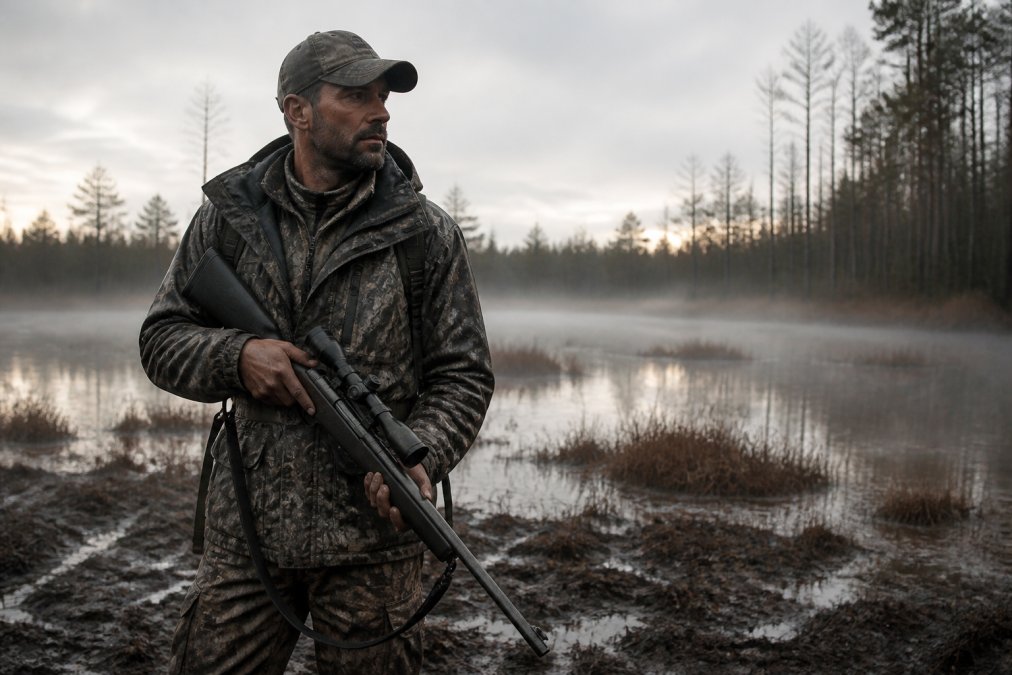
Backwater Outfitters: Community-Built Gear for Mud and Water
Backwater Outfitters stands apart because it was built by people living the lifestyle, not by a corporation chasing quarterly targets. The brand focuses on what matters: durable apparel for hunting, fishing, and off-roading. Every piece is designed with the understanding that your gear will face mud, water, and hard use.
The Backwater Off-Road T-Shirt ($33.99) demonstrates this approach. It's 100% ring-spun U.S. cotton, garment-dyed for a lived-in feel, and built with heavyweight 6.1 oz fabric. No shortcuts. The tubular knit construction eliminates side seams, which is where cheap shirts fail. Double-needle stitching means the seams actually hold. This isn't marketing speak. This is the difference between gear that lasts one season and gear that lasts five.

The Backwater Outfitters Hoodie ($40.00) uses a 50/50 cotton-poly blend with 8.0 oz weight. The double-lined hood and roomy kangaroo pocket aren't design flourishes. They're solutions to actual problems: wind blocking and hand warmth during long days on the water. The OEKO-TEX certified dyes mean you're not wearing chemicals.
What sets Backwater Outfitters apart as a cabelas alternative for rugged outdoor gear is the community focus. This isn't a brand trying to be everything to everyone. It's a brand that understands the specific needs of hunters, fishermen, and off-roaders. The pricing sits between mass-market and premium, which reflects real quality without the luxury markup.
:::pro-tip Backwater Outfitters gear is designed to break in, not fall apart. The garment-dyed fabric softens with washing, which means your shirt feels better after six months than it does on day one. This is the opposite of how most outdoor apparel works. :::
Specialized Alternatives for Specific Activities
Beyond community-driven brands, specialized retailers dominate specific niches. Hunting apparel requires different engineering than fishing apparel. Seam placement, breathability, and insulation needs diverge based on activity.
For hunting specifically, brands focused on concealment and silent movement have engineered fabrics that reduce noise while maintaining durability. For fishing, moisture management becomes paramount because you're spending hours in humidity or near water. For off-roading, abrasion resistance matters more than anything else because your gear will contact sharp metal, rocks, and brush constantly.
The cabelas alternative for rugged outdoor gear space has room for all three approaches because each solves a different problem. A general retailer tries to stock one solution for all three uses. Specialized alternatives build separate lines for each.
Durable Hunting Apparel Brands That Outperform Big-Box Retailers
Hunting apparel lives in a narrow performance window. You need breathability so you don't sweat during the hike in. You need insulation so you don't freeze during the long sit. You need silence so fabric doesn't crunch. You need durability so thorns and brush don't shred the seams.
Most mass-market hunting apparel fails the silence test. Cheap polyester crinkles. Cheap nylon squeaks. The moment you move, every animal within fifty yards knows something's wrong. Specialized hunting brands engineer fabrics with tight weaves that dampen sound while maintaining breathability.
The Backwater Outfitters Hunting T-Shirt ($22.99) uses 100% cotton at medium weight. Cotton absorbs moisture without the noise problems of synthetics. The ribbed collar and shoulder tape retain shape after repeated washing, which matters because a stretched-out shirt won't fit right in a treestand. OEKO-TEX certification means the dyes won't fade or bleed.
Hunting apparel alternatives share a common thread: they're built by hunters, tested in the field, and refined based on real failure points. When a seam fails at 4 a.m. in November, the brand hears about it and redesigns. Cabela's processes feedback through a corporate structure. Specialized brands iterate fast.
How to Choose Durable Outdoor Gear: What Actually Matters
Durability isn't a single factor. It's the intersection of fabric choice, seam construction, fit, and care. Most people focus on price and miss the engineering that actually determines how long gear lasts.
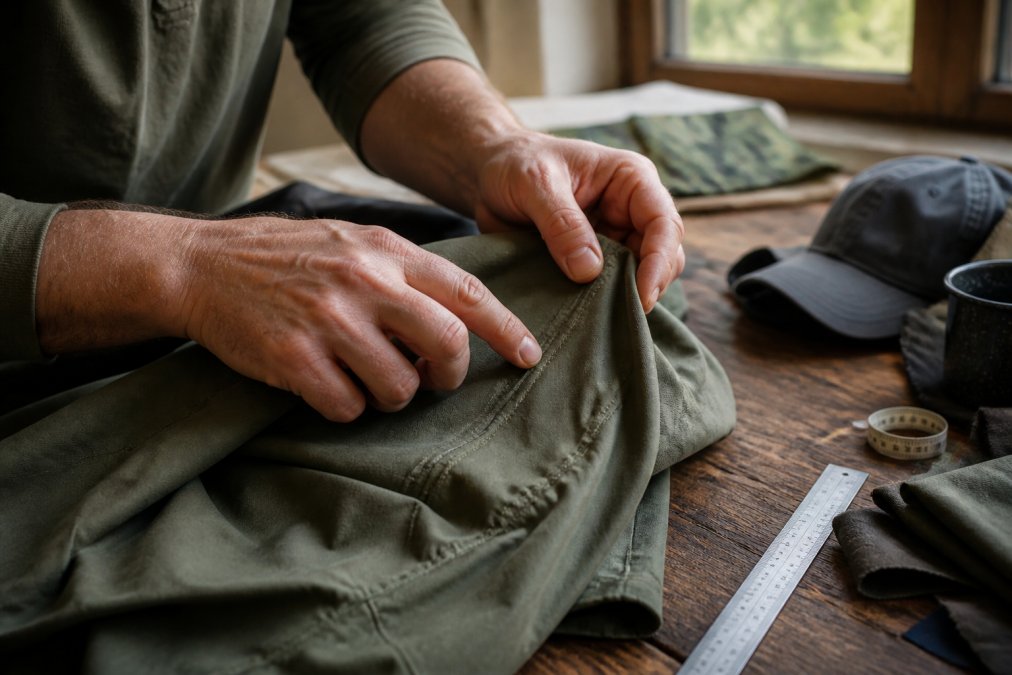
Fabric Technology and Weather Resistance
The fabric is where durability begins. Cotton, synthetics, and blends each have tradeoffs. Cotton breathes and ages beautifully but absorbs water. Synthetics dry fast but can degrade under UV exposure. Blends split the difference but require careful engineering.
Garment-dyed fabrics last longer than piece-dyed alternatives because the dye penetrates deeper into the fiber. This matters because fading indicates fiber breakdown. A shirt that holds its color for five years is probably holding its structural integrity too. Ring-spun cotton is stronger than open-end cotton because the fibers are twisted tighter. Higher weight (measured in ounces per square yard) means more fiber, which means more durability.
Waterproofing adds complexity. Seam-sealed construction is essential because the fabric itself isn't the weak point. Water finds the stitching holes. Brands that skip seam sealing are cutting costs at the exact point where gear fails. Breathability requires a balance: waterproof membranes block water but can trap moisture if they're not permeable enough. The best alternatives use technologies that let sweat escape while blocking rain.
Seam Construction and Long-Term Durability
Seams are where most gear fails. A strong seam requires three elements: thread quality, stitch density, and reinforcement.
Double-needle stitching creates two parallel rows of stitches instead of one. If one row fails, the other holds. This doubles the thread path and dramatically increases durability. Single-needle seams are cheaper to produce and fail faster.
Stitch density matters. More stitches per inch means more thread holding the seam together. Cheap manufacturers reduce stitch count to speed up production. The result is seams that split under stress.
Reinforced seams use extra fabric strips (called tape or binding) to reinforce the stitch line. This prevents the seam from tearing through the fabric itself. Tubular knit construction (where the fabric is knit as a tube rather than flat) eliminates side seams entirely, which is why Backwater Outfitters uses it. No side seams means no weak points on the sides.
The cabelas alternative for rugged outdoor gear brands that last invest in seam construction because they know where gear fails. A shirt that costs $35 might have 12 stitches per inch with single-needle seams. A shirt that costs $40 might have 16 stitches per inch with double-needle seams and reinforced shoulders. That $5 difference determines whether the shirt lasts two years or five.
Fit and Functionality for Your Activity
Durability is meaningless if the gear doesn't fit your body or your activity. A shirt engineered for a slim frame won't work for someone with a larger build. Gear designed for sitting still in a treestand won't work for someone hiking five miles to get there.
Women's outdoor apparel deserves specific mention here because it's been a disaster for years. Many brands simply shrink men's patterns and call it a women's cut. Real women's gear has different shoulder placement, chest measurement ratios, and torso length. Brands that take this seriously build separate patterns instead of just scaling down.
Activity-specific fit matters too. Fishing requires mobility in the shoulders and hips for casting. Hunting requires a fit that works while sitting. Off-roading requires a fit that doesn't bunch when you're gripping a steering wheel or handlebars. The best alternatives engineer fit for the specific movement patterns of each activity.
| Consideration | What to Look For | Why It Matters |
|---|---|---|
| Fabric Weight | 6+ oz for durability | Heavier fabric resists tears and lasts longer |
| Seam Construction | Double-needle or reinforced | Single-needle seams fail under stress |
| Fit Type | Activity-specific (not generic) | Proper fit prevents bunching and chafing |
| Waterproofing | Seam-sealed, not coated | Coatings wash out; seals last years |
| Dye Method | Garment-dyed | Deeper color penetration means stronger fibers |
Price-to-Performance: Where You Actually Save Money
The cabelas alternative for rugged outdoor gear market is competitive on price because specialization eliminates waste. Cabela's stocks thousands of items with low turnover on most. Specialized brands stock fewer items with high turnover, which means lower inventory costs and better pricing.
Backwater Outfitters pricing reflects this. A heavyweight t-shirt at $33.99 costs more than a big-box equivalent at $24.99. But the Backwater shirt has double-needle stitching, tubular knit construction, and garment-dyed fabric. The big-box shirt has single-needle seams and piece-dyed fabric. Over three years, you'll buy two big-box shirts and one Backwater shirt. The math favors specialization.
Premium brands charge luxury premiums for heritage and marketing. Alternatives compete on value by offering premium construction at reasonable prices. You're paying for engineering and durability, not for a century of brand history.
The real savings appear when you calculate cost per wear. A $40 hoodie that lasts five years costs $8 per year. A $25 hoodie that lasts two years costs $12.50 per year. The expensive option is cheaper.
What Sets Backwater Outfitters Apart
Backwater Outfitters functions as a community brand rather than a retail operation. The distinction matters. A retail operation buys products from manufacturers and marks them up. A community brand designs products based on what the community actually needs.
This manifests in specific ways. The Backwater Outfitters Low Profile Baseball Cap ($33.99) uses 100% cotton twill with reinforced interior seams. The Velcro closure lets you dial in fit precisely, which matters because hat fit affects visibility and comfort during long days. This isn't a luxury feature. It's a solution to a problem that hunters and fishermen face constantly.
The accessories line, including the Off-Road Mud Truck Travel Mug ($28.99) and Can Cooler ($7.50), reflects the same philosophy. The travel mug uses vacuum-insulated stainless steel with a leak-resistant screw-on lid. The can cooler uses foam lining and edge-to-edge printing. These are designed by people who actually use them on the trail, not by designers in a corporate office.

As a cabelas alternative for rugged outdoor gear, Backwater Outfitters succeeds because it solves the core problem: you need gear built by people who understand your lifestyle. The brand doesn't try to stock everything. It stocks what works. The result is a focused collection that outperforms generalist retailers across the categories it covers.
Finding a cabelas alternative for rugged outdoor gear requires shifting your thinking from breadth to depth. You're not looking for one store that stocks everything. You're looking for brands that obsess over the specific conditions you face. Backwater Outfitters delivers that focus with gear engineered for hunters, fishermen, and off-roaders. The community-driven approach means every product solves a real problem. The construction details, double-needle stitching, garment-dyed fabric, reflect priorities that mass-market retailers ignore. Start with the Backwater Off-Road T-Shirt or Hoodie to experience the difference that specialization makes. You'll understand immediately why serious outdoor people are making the switch.
Frequently Asked Questions
What makes a good Cabela's alternative for rugged outdoor gear?
A strong alternative focuses on durable construction with field-tested fabrics, seam-sealed waterproof shells, and abrasion-resistant materials. Look for brands that prioritize specific activities, hunting, fishing, or off-roading, rather than generic outdoor wear. Backwater Outfitters, for example, uses heavyweight cotton and double-needle stitching on core pieces like the Off-Road T-Shirt ($33.99), built specifically for heavy use in mud and water. The best alternatives also offer transparent warranty policies and customer reviews from actual field users, not just marketing shots.
Are smaller outdoor brands actually more durable than big-box retailers?
Smaller, specialized brands often outperform mass-market retailers because they focus on specific use cases rather than broad appeal. Durable hunting apparel brands invest in technical layering systems, moisture-wicking base layers, and seam-sealed construction that big-box stores skip to keep prices low. These brands also tend to use higher-grade synthetic insulation and breathable fabrics. The trade-off is price, you'll pay more upfront, but gear lasts longer and performs better in extreme weather, making the price-to-performance ratio actually favorable over time.
How do I know if outdoor gear will actually hold up to hard use?
Check for specific construction details: double-needle stitching, tubular knit (no side seams), and reinforced stress points. Examine fabric weight (measured in ounces per square yard) and look for seam-sealed or taped seams on waterproof layers. Read reviews from people doing the exact activity you plan, a fishing guide's review carries more weight than a casual camper's. Backwater Outfitters publishes care instructions and warranty details upfront, and their garment-dyed heavyweight tees use 6.1 oz fabric with tubular knit construction, signals of durability. Request photos from actual users before buying if the brand offers that option.
What's the difference between budget-friendly and premium outdoor gear?
Budget gear prioritizes affordability and basic function; premium gear invests in technical fabrics, advanced weatherproofing, and refined fit. Premium brands use breathable, moisture-wicking materials that regulate temperature in extreme conditions, while budget options often use basic cotton or thin synthetic blends. Premium gear also includes features like double-lined hoods, color-matched drawcords, and gusseted seams. The Backwater Outfitters Hoodie ($40.00) uses a 50/50 cotton-poly blend with a double-lined hood and roomy kangaroo pocket, details that add cost but extend usable life and comfort across seasons.
This article was written using GrandRanker