

How to Pick Durable Hunting Pants: A Buyer's Guide
Table of Contents
- What Makes Hunting Pants Durable
- Hunting Pants Fabric Comparison: Materials That Hold Up
- Construction Details That Prevent Failure
- Hunting Pants with Reinforced Knees and High-Wear Zones
- Fit, Range of Motion, and Practical Features
- Weather Performance: Breathability, Water Repellency, and Temperature Control
- How to Care for Hunting Pants to Extend Their Life
- Choosing the Right Pants for Your Hunting Style
What Makes Hunting Pants Durable
Durability in hunting pants comes down to three core factors: materials, construction, and maintenance. Hunting demands a unique combination of requirements: freedom of movement for stalking and shooting, protection from brush and thorns, weather resistance without overheating, and enough pocket space for gear without bulk. The best approach is to match the durability profile to your hunting environment. A turkey hunter in dense brush needs different protection than a waterfowl hunter dealing with cold, wet conditions. We've found that hunters who understand these distinctions make better choices and end up with pants that actually hold up to their specific demands.
Hunting Pants Fabric Comparison: Materials That Hold Up
The fabric you choose determines how well your pants resist tears and how they perform in different conditions. Most hunting pants use synthetic blends rather than pure cotton, because cotton absorbs moisture, loses strength when wet, and doesn't recover well from abrasion damage.
Ripstop and Abrasion Resistance
Ripstop fabric is woven with a reinforced grid pattern that stops small tears from spreading into larger rips. The denier rating (the weight and thickness of individual fibers) determines how much abuse a ripstop fabric can take. Lower denier fabric (around 200D) is lighter and more breathable but less resistant to puncture. Higher denier (400D and up) is tougher but heavier. Most quality hunting pants use 300-400D ripstop as a balance.
Abrasion resistance matters most in high-wear zones like the seat, inner thighs, and knees. A fabric with poor abrasion resistance will develop pilling, thinning, and eventually holes within a single season. Tightly woven materials with a smooth surface tend to perform better than loose, fuzzy weaves that snag easily.
Synthetic Blends vs. Cotton
Cotton hunting pants seem appealing because they're comfortable and affordable, but they fail in the field. Wet cotton loses tensile strength and becomes weaker and more prone to tearing. Once cotton dries, it often loses its original shape and fit.
Synthetic blends, typically nylon or polyester mixed with small amounts of spandex for stretch, perform dramatically better. They dry quickly, maintain their strength when wet, and resist abrasion far better than cotton. Modern hunting pants from quality manufacturers use soft-hand finishes to make synthetics feel nearly as comfortable as cotton while delivering superior durability.
Construction Details That Prevent Failure
The best fabric in the world won't save pants with poor construction. A single weak seam can unravel an entire garment, and a zipper installed incorrectly will fail right when you need it most.
Seams and Stitching Quality
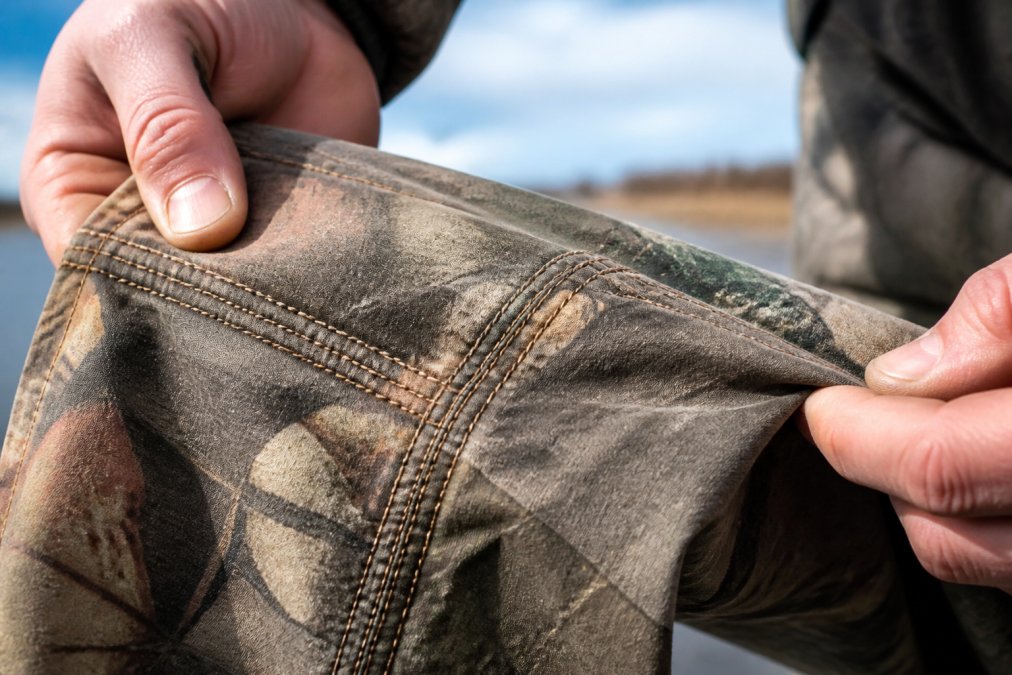
Seams are the first place hunting pants fail under stress. A properly constructed seam uses multiple passes of thread, creating redundancy so that if one thread breaks, others hold the garment together. Budget pants often use single-pass stitching, which means one broken thread can cause the entire seam to separate.
Look for seams that are flat-felled or double-stitched, especially in high-stress areas like the crotch, seat, and thigh seams. A flat-felled seam is folded and stitched twice, creating a seam nearly as strong as the fabric itself. Quality hunting pants use polyester thread rather than cotton thread, because polyester maintains its strength when wet and doesn't degrade as quickly from UV exposure.
Reinforced Areas and Gussets
A gusseted crotch is a triangular panel of fabric sewn into the crotch seam that distributes stress across a wider area, preventing the seam from bearing all the strain of movement. Without a gusset, the crotch seam is under constant tension every time you move, crouch, or stretch.
Reinforced areas should appear in the seat, inner thighs, and around pockets. Quality reinforcement uses additional layers of the same ripstop fabric. Pants with proper gussets and reinforcement typically last 3-5 years of regular use, while poorly constructed pants might fail within a season.
Hunting Pants with Reinforced Knees and High-Wear Zones
Reinforced knees are essential if you spend significant time kneeling or crawling through brush. The knee is a stress concentration point where your entire body weight presses down when you kneel, and the fabric flexes with every movement.
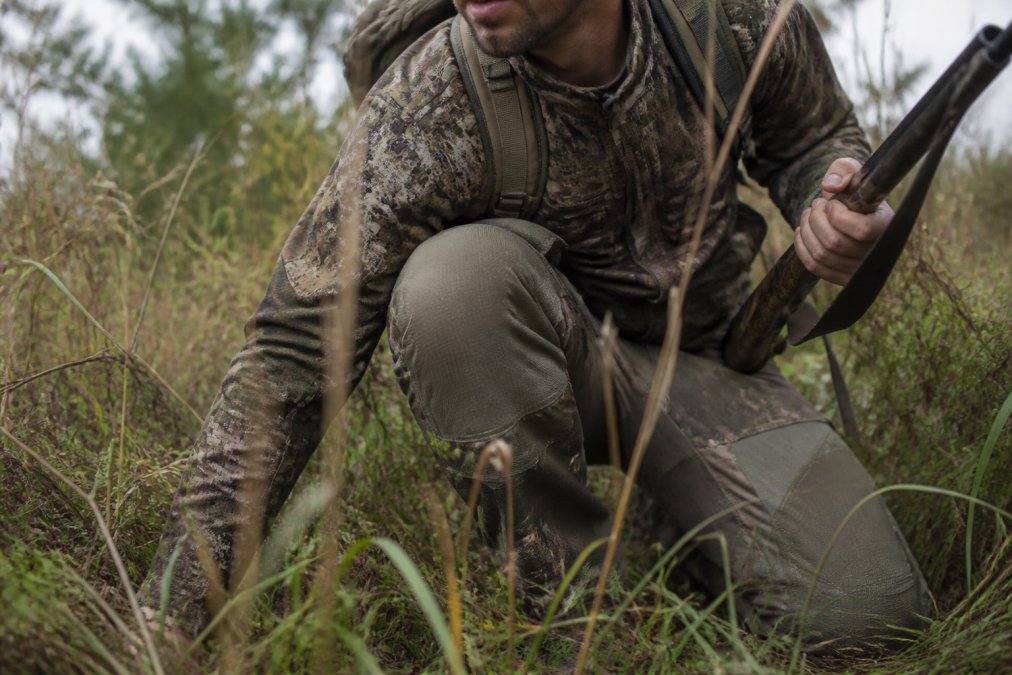
Reinforced knees should use a heavier ripstop fabric or multiple layers of standard ripstop, creating a panel that extends from just above the knee to just below it. The reinforcement should be sewn down securely so it doesn't shift or bunch under your leg.
Beyond knees, look for reinforcement in the seat and upper thighs. A single-layer seat will develop holes and thin spots; a reinforced seat will maintain integrity through multiple seasons. High-wear zones vary depending on your hunting style. A tree stand hunter needs reinforcement in the seat and lower back. A ground hunter stalking through brush needs reinforcement across the thighs and knees. A waterfowl hunter needs reinforcement everywhere because wet fabric is more prone to tearing.
Fit, Range of Motion, and Practical Features
Durability means nothing if the pants restrict your movement or fail to fit properly. Ill-fitting pants create stress points where fabric bunches and seams strain under uneven tension.
Articulated Design and Gusseted Crotch
An articulated design means the pants are cut with seams and panels that follow your body's natural movement pattern. Instead of straight legs that restrict motion, articulated pants have seams that angle at the knees and hips, allowing you to move naturally without the fabric pulling or bunching. This reduces stress on seams and fabric, preventing premature failure.
Look for pants with some amount of stretch built into the fabric itself. A small percentage of spandex (typically 2-5%) adds flexibility without compromising durability, allowing the pants to move with your body rather than against it.
Pocket Configuration and Gear Storage
Pockets are high-stress areas because gear weight creates constant pulling and strain on the seams. Quality hunting pants use reinforced pocket openings with bar-tacked corners (extra stitching in an X or box pattern at stress points) that prevent seams from separating. The pocket bag itself should be made of durable ripstop.
A practical configuration typically includes two thigh pockets, two hip pockets, and one or two cargo pockets on the legs. This distributes gear storage across multiple points rather than concentrating weight in one area.
Weather Performance: Breathability, Water Repellency, and Temperature Control
Durability isn't just about toughness, it's also about how well the pants perform in the conditions you hunt in. A fabric that's tough but doesn't breathe will leave you soaked in sweat, which accelerates degradation.
A DWR finish (durable water repellent) is a chemical coating applied to the fabric that causes water to bead up and roll off rather than soaking in. DWR-treated pants will shed light rain and morning dew but won't keep you dry in heavy downpour. The advantage is that DWR-treated fabric remains breathable, unlike fully waterproof shells that trap moisture. DWR finishes wear off over time and can be reapplied after washing.
Breathability is measured by how quickly moisture vapor escapes through the fabric. A breathable fabric allows sweat to evaporate rather than accumulating against your skin. This extends the life of the garment by preventing mildew growth and material degradation.
Temperature regulation comes down to fabric weight and construction. Many hunters use a layering system with lightweight durable pants as a base layer and insulated layers added on top as conditions demand.
How to Care for Hunting Pants to Extend Their Life
Even the best-constructed pants will fail prematurely if you don't care for them properly. Simple maintenance habits can extend the life of your hunting pants by years.
Washing and Storage Best Practices
Wash your hunting pants inside-out in cold water with mild detergent. Inside-out washing reduces abrasion on the outer surface during the wash cycle. Cold water prevents the synthetic fabric from degrading and helps preserve the DWR finish. Avoid fabric softener, which coats the fabric and reduces breathability and water repellency.
Machine wash on a gentle cycle and skip the dryer. High heat damages synthetic fabrics and can melt spandex fibers. Hang-dry your pants in a cool, dry location away from direct sunlight.
Store your hunting pants in a cool, dry place during off-season. Don't store them compressed in a tight space; hang them or fold them loosely so the fabric maintains its shape.
Field Repair Techniques
Small repairs in the field can prevent minor damage from becoming catastrophic failure. Carry a small repair kit with needle, thread that matches your pants color, a small patch of ripstop fabric, and a lightweight adhesive patch.
For a small tear, apply an adhesive patch on the inside to hold it together temporarily. For a seam that's starting to separate, use a simple running stitch to close the gap. A more permanent field fix for small tears is to sew on a ripstop patch using a box stitch, which distributes stress around the patch rather than concentrating it at the edges. The patch should extend at least an inch beyond the tear in all directions.
Choosing the Right Pants for Your Hunting Style
The best durable hunting pants for one person might be completely wrong for another. A waterfowl hunter spending hours in cold water has different needs than a rifle hunter covering miles of terrain in mild weather.
For early-season hunting in warm conditions, prioritize breathability and articulation over insulation. Lightweight ripstop with a gusseted crotch and reinforced knees will serve you well.
For late-season hunting in cold conditions, use lightweight durable pants as a base and add insulated layers on top. This gives you the durability and breathability of quality base pants plus the temperature control of layered insulation.
For waterfowl or other wet-environment hunting, look for pants with a strong DWR finish and reinforced seat and thighs. Quick-drying synthetic fabric is essential.
For brush and thorn-heavy terrain, prioritize abrasion resistance. A higher denier ripstop (400D or more) will better resist puncture and tearing from sharp vegetation.
Backwater Outfitters designs pants specifically for these different hunting scenarios, recognizing that durability requirements vary based on environment and hunting method. Understanding your specific needs helps you choose pants that will actually hold up to your hunting style.
Choosing durable hunting pants means understanding the specific demands of your hunting environment and matching your gear to those demands. The fabric, construction, fit, and maintenance all work together to determine how long your pants will last. Backwater Outfitters offers hunting pants engineered for different hunting styles and seasons, with reinforced high-wear zones, quality seams, and ripstop fabrics designed to withstand years of field use. The right pair of pants should move with you, protect you from the elements, and hold together through multiple seasons of hard hunting.
Frequently Asked Questions
What fabric is best for durable hunting pants?
Ripstop synthetic blends and nylon-cotton composites outperform pure cotton for durability. Ripstop construction prevents small tears from spreading, while synthetic materials resist abrasion and dry faster. Look for fabrics with high denier ratings (higher denier = thicker, more durable), DWR (durable water repellent) finish, and moisture-wicking properties. The best choice depends on your hunting environment, early-season hunts favor breathable synthetics, while late-season demands insulated, weatherproof options.
Why do hunting pants with reinforced knees matter?
Knees and the seat experience the most stress during hunting, from crawling through brush, kneeling to shoot, and repeated movement. Reinforced knees extend the pants' lifespan by 2-3 seasons compared to standard construction. Double-layer or triple-stitched reinforcement at high-wear zones prevents blowouts that end a hunt prematurely. Quality reinforcement also includes gusseted crotch design to reduce strain on seams during articulated movement.
How often should I wash hunting pants, and what's the right way?
Wash hunting pants after every 3-4 days of heavy use or when visibly soiled. Use cold water, mild detergent, and avoid fabric softeners that reduce water repellency. Hang dry or tumble dry on low, high heat damages synthetic fibers and DWR coatings. Check seams and zippers before storage. Store in a cool, dry place away from direct sunlight. Proper care maintains breathability and water-repellent finishes, preventing premature degradation.
What should I look for in hunting pants for different weather conditions?
Early-season hunts in warm weather demand lightweight, breathable synthetic blends with moisture-wicking and ventilation features. Late-season requires insulated or thicker fabrics with windproof construction and enhanced water repellency. Year-round versatility comes from layering-compatible designs, choose pants that fit comfortably over thermal base layers without excess bulk. Check for adjustable cuffs and waistbands to accommodate layering and ensure a secure, non-slip fit in varied conditions.
This article was written using GrandRanker