

How to Spot Quality Outdoor Apparel: A Buyer's Guide
Table of Contents
- What Makes Outdoor Apparel High-Quality
- Why Avoid Cotton for Hiking and Field Work
- How to Check Garment Construction Quality
- Key Fabrics That Signal Durability
- Testing Weatherproofing and Breathability
- Best Outdoor Clothing Brands for Durability
- Red Flags That Signal Poor-Quality Gear
- Evaluating Fit and Ergonomic Design
Last Updated: August 15, 2026
What Makes Outdoor Apparel High-Quality
High-quality outdoor apparel combines durable materials, precise construction, and thoughtful design to withstand demanding conditions. When you spot quality outdoor apparel, you're looking at garments engineered to perform under stress, whether that's wind, water, temperature swings, or the abrasion of constant movement.
The difference between gear that lasts a season and gear that lasts years comes down to specific, observable details. Seam construction, fabric weight, hardware quality, and weatherproofing methods all signal durability. At Backwater Outfitters, we've built our reputation on gear that hunters, anglers, and off-roaders depend on because we understand what "quality" actually means in the field.
Most people assume expensive equals durable. That's only true if you know what to look for. A $200 jacket with poor seam sealing fails faster than a $120 jacket with taped seams and proper construction. The price tag tells you nothing without understanding the technical details underneath.
Why Avoid Cotton for Hiking and Field Work
Cotton absorbs moisture and loses its insulating properties when wet, a dangerous combination in outdoor environments. When you're hiking or fishing and your cotton shirt gets damp from sweat or rain, it clings to your skin and drains body heat rapidly. This is why avoiding cotton for hiking is non-negotiable.
Synthetic fabrics and wool perform differently. Merino wool maintains warmth even when damp and naturally regulates temperature across a wide range. Synthetic materials like polyester and nylon wick moisture away from skin and dry quickly. Both outperform cotton in active outdoor scenarios.
The moisture-wicking property matters most during sustained activity. After two hours of hiking in a cotton shirt, you'll feel the difference immediately, heaviness, chill, and discomfort. Synthetic base layers and mid-layer shirts keep you dry and comfortable for the entire outing. Field-tested apparel from brands like Backwater Outfitters uses these materials specifically because they've proven themselves in real conditions.
Cotton also deteriorates faster in outdoor use. It tears more easily, loses shape after repeated washing, and degrades when exposed to UV light. If you want gear that survives multiple seasons, avoiding cotton isn't optional, it's essential.
How to Check Garment Construction Quality
Construction quality determines whether seams fail after one season or hold for years. You can evaluate this yourself without technical equipment by examining specific details.
Seam Sealing and Stitch Density
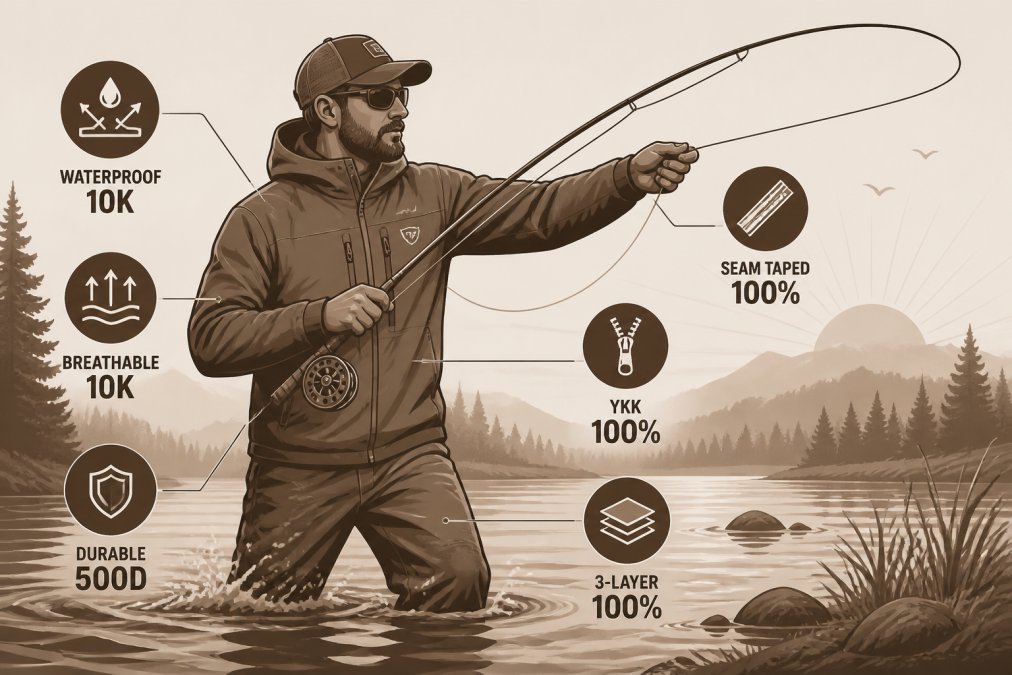
Seams are failure points. Water follows thread, so unsealed seams leak even if the fabric itself is waterproof. Seam sealing, applying a waterproof tape or adhesive to the interior seam, prevents this. When you spot quality outdoor apparel, look for visible seam tape on the inside of jackets and pants, especially around shoulders, armpits, and leg seams.
Stitch density refers to how many stitches per inch hold the seam together. Higher density means stronger seams. Examine the stitching with your eyes and fingers. Quality construction shows 8-12 stitches per inch on critical seams. You'll see tight, even stitching with no gaps or loose threads. Poor-quality seams show 4-6 stitches per inch and often have irregular spacing.
Run your finger along interior seams. Sealed seams feel smooth and flat. Unsealed seams feel like raised thread lines. The difference is immediate and tactile. If you can feel the individual stitches clearly, the stitch density is too low.
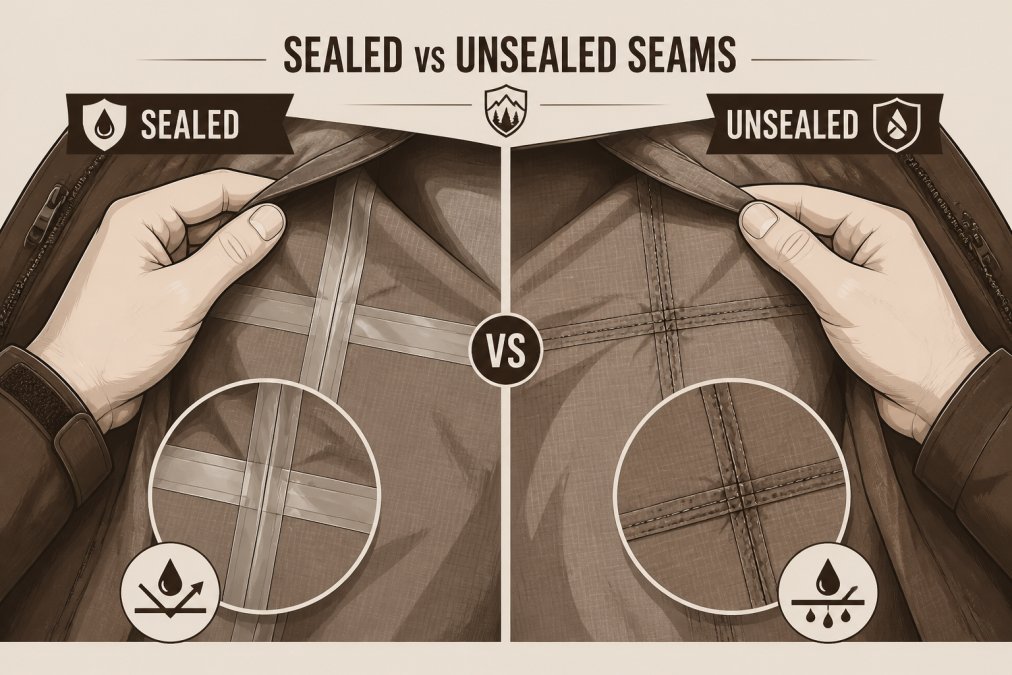
Check corner seams especially, where sleeves meet body, where pockets attach, where zippers are sewn in. These high-stress points either have reinforced stitching or they fail first. Quality apparel shows double or triple stitching at these corners.
Hardware and Zipper Durability
Zippers fail regularly on cheap gear. When you're evaluating outdoor apparel, examine the zipper slider and teeth carefully. YKK zippers are the industry standard, look for the "YKK" marking on the slider. These zippers have tighter tolerances and last longer than generic alternatives.
Pull the zipper slowly and feel for resistance. A quality zipper moves smoothly without catching or requiring force. Cheap zippers stick, skip teeth, or separate mid-use. Test it multiple times. If it binds on the first pull, it will fail in the field.
Check zipper pulls. Quality pulls are reinforced fabric or leather tabs that won't tear off. Weak plastic pulls break easily, especially in cold weather when plastic becomes brittle. Look for pull tabs that are stitched or riveted to the slider, not just glued.
Buttons, snaps, and other hardware should be sewn securely. Wiggle them gently. They shouldn't move or feel loose. Cheap hardware is glued rather than sewn, which means it detaches after a few uses.
Key Fabrics That Signal Durability
Fabric weight, measured in denier or gsm (grams per square meter), directly correlates with durability. Higher weight fabrics resist abrasion better. When you spot quality outdoor apparel, check the fabric specification on the tag or hang tag.
Ripstop nylon is standard for outdoor pants and jackets. The ripstop weave includes reinforcing threads that prevent small tears from spreading. Look for visible ripstop pattern, small diamond-shaped grid visible in the fabric. This pattern indicates intentional tear-resistance engineering.
Breathable membranes like Gore-Tex offer both waterproofing and breathability. These membranes have microscopic pores that block water droplets but allow water vapor to escape. Apparel with breathable membranes costs more, but the performance difference is dramatic. You stay dry from rain and dry from sweat, a combination cotton or basic synthetic can't achieve.
Durable water repellent (DWR) finish is a coating applied to the fabric surface that causes water to bead up and roll off. DWR isn't permanent, it washes out over time, but quality apparel uses DWR that lasts 20+ wash cycles. Check the product description or tag for DWR information.
Nylon and polyester are the baseline fabrics. They're lightweight, affordable, and functional. Merino wool offers superior temperature regulation. Cotton should be avoided entirely for active outdoor use. Each material serves a purpose, but the weight and construction matter more than the base material itself.
Testing Weatherproofing and Breathability
Waterproof rating is measured in millimeters of hydrostatic head, essentially how much water pressure the fabric can withstand before leaking. A rating of 1,500 mm handles light rain. 5,000 mm handles moderate rain. 10,000 mm and above handles heavy rain and submersion. For serious outdoor work, look for 10,000 mm minimum on jackets.
Breathability is measured in grams of water vapor transmitted per square meter per 24 hours (MVTR). Higher numbers mean better breathability. 5,000+ MVTR keeps you comfortable during active use without condensation buildup. Lower ratings feel clammy during exertion.
You can't test these ratings at home with precision, but you can evaluate real-world performance. Wear the jacket during moderate activity and assess sweat buildup. Quality apparel lets sweat escape while blocking wind and water. If you feel damp from sweat within 30 minutes of activity, the breathability is insufficient.
Test water repellency by sprinkling water on the fabric. Quality gear shows water beading up and rolling off immediately. Water that soaks in or spreads across the fabric indicates poor DWR coating or inadequate waterproofing.
Best Outdoor Clothing Brands for Durability
Brands that prioritize durability use consistent construction standards, quality materials, and rigorous testing. When evaluating outdoor apparel, research brand reputation through field reviews and user feedback rather than marketing claims.
Backwater Outfitters stands out because our designs are inspired by hardworking outdoor people and built for the conditions they actually face. We understand that hunters, anglers, and off-roaders need gear that performs under stress. Our apparel uses seam-sealed construction, quality hardware, and durable fabrics because we've tested these choices in real conditions, not just in laboratories.
Other established brands in outdoor apparel have built reputations on durability and performance. Look for brands with transparent construction specifications, clear fabric information, and genuine user reviews from people using the gear in demanding conditions. Avoid brands that focus primarily on marketing and fashion over functional design.
The best indicator of durability isn't the brand name, it's the specific construction details you can verify yourself. A lesser-known brand with excellent seam sealing and quality hardware will outlast a famous brand with poor construction.
Red Flags That Signal Poor-Quality Gear
Certain details immediately signal that apparel won't hold up. Learning to spot these red flags saves money and frustration.
Loose stitching is the first warning sign. If you can see gaps between stitches or if threads pull easily, the seam will fail. Quality stitching is tight and even with no visible gaps.
Unsealed seams on waterproof jackets are a major red flag. If the interior shows raw seams with no tape or adhesive, water will find those seams. This is a fundamental failure of waterproof apparel.
Flimsy zippers that bind or skip teeth indicate poor quality throughout. If the manufacturer cut corners on the zipper, they cut corners elsewhere too. Zippers are relatively inexpensive, so skimping on them suggests cost-cutting across the board.
Weak hardware, buttons that feel loose, snaps that don't hold securely, pull tabs that seem fragile, all indicate rushed manufacturing. These details are easy to check before purchase.
Garments that feel thin or flimsy when held indicate low fabric weight. While lightweight gear has its place, outdoor work apparel should feel substantial. Run the fabric between your fingers, quality gear resists stretching and tearing.
Inconsistent stitching across different seams suggests quality control issues. If one seam is tight and another is loose on the same garment, the manufacturer isn't maintaining standards. This inconsistency predicts failure points.
Cheap fabric that pills or shows wear immediately after handling signals poor durability. Rub the fabric against itself, if fuzzing appears instantly, the fabric won't survive a season of field use.
Evaluating Fit and Ergonomic Design
Proper fit affects both comfort and durability. Tight garments stress seams and restrict movement. Loose garments allow wind and water penetration and create bulk that interferes with activity.
Articulated joints in shoulders and elbows allow natural movement without bunching or pulling. Check how the sleeve attaches to the body. Quality apparel has sleeves positioned so your arm hangs naturally without tension at the shoulder seam. Move your arms through a full range of motion, reaching forward, raising overhead, pulling back. The garment should move with you, not against you.
Ergonomic design means the garment is shaped for how you actually use it, not just sized proportionally. Hunting and fishing require forward-leaning posture. Quality apparel for these activities has longer back panels and shorter front panels to accommodate this. Off-roading requires arm mobility and protection from brush. Quality off-road apparel has reinforced areas and articulated sleeves.
Ventilation placement matters. Underarm vents, back vents, and zippered chest panels let you adjust airflow during activity. Quality apparel includes these features in logical locations based on how the gear will be used.
Pocket placement and design affect functionality. Pockets should be positioned where you can access them while wearing a pack or harness. Quality apparel has reinforced pockets that won't tear under load and zippers that won't snag on gear.
Test fit by moving through your actual activity. If you're buying hiking pants, squat and lunge. If you're buying a fishing shirt, simulate casting motions. The garment should feel like an extension of your body, not a constraint.
Spotting quality outdoor apparel requires understanding what durability actually means in the field. Look at seam construction, examine hardware, assess fabric weight, and test fit through realistic movement. These details separate gear that fails after one season from gear that lasts years. When you're ready to invest in apparel that performs, Backwater Outfitters delivers the construction quality and design thoughtfulness that serious outdoor enthusiasts depend on. Visit our site to explore gear built for hunters, anglers, off-roaders, and everyone who lives for outdoor adventure.
Frequently Asked Questions
Why should I avoid cotton when hiking or fishing?
Cotton absorbs moisture and dries slowly, leaving you wet and cold during outdoor activities. When cotton gets wet, whether from sweat, rain, or water exposure, it loses its insulating ability and can lead to hypothermia in cool conditions. Synthetic fabrics and merino wool wick moisture away from your skin and dry faster, keeping you comfortable and safe during long days on the trail or water.
How can you tell if outdoor gear is durable by looking at the stitching?
Check for tight, even stitching with high stitch density (typically 8-12 stitches per inch on quality gear). Look for reinforced seams at stress points like shoulders, underarms, and pocket corners. Seams should be sealed with waterproof tape on the inside. Loose, uneven, or sparse stitching indicates lower quality. Run your finger along seams, they should feel smooth and secure, with no gaps or puckering.
What features define high-quality outdoor apparel?
Quality outdoor apparel combines durable water-repellent (DWR) coatings, breathable moisture-wicking fabrics, reinforced seams with high stitch density, quality zippers and hardware, and thoughtful construction for articulated joints. The fabric weight (measured in denier or GSM) should match the intended use. Taped seams, ripstop reinforcement in high-wear areas, and proper ventilation systems all signal premium construction designed to withstand hard use.
Do expensive outdoor brands always offer better quality?
Price doesn't guarantee quality. Some premium brands charge more for marketing and heritage than construction improvements. Evaluate gear on its own merits: examine fabric specifications, check stitch quality, test weatherproofing, and read reviews from actual users in your intended activity. Mid-range brands often deliver better value than luxury labels. Focus on construction details and durability testing rather than brand name alone.
This article was written using GrandRanker