

How to Wash Hunting Gear and Keep It Scent-Free
Table of Contents
- Why Washing Hunting Gear the Right Way Actually Matters
- What You'll Need Before You Start
- Step-by-Step: How to Wash Hunting Gear Properly
- Choosing the Best Scent-Free Laundry Detergent for Hunting Clothes
- Handling Specialized Fabrics: Wool, Base Layers, and Scent-Lock Gear
- How to Store Hunting Clothes to Prevent Scent Contamination
- Common Washing Mistakes That Blow Your Cover
- Seasonal Maintenance: Keeping Gear Fresh Year-Round
Last Updated: August 9, 2026
Why Washing Hunting Gear the Right Way Actually Matters
Most hunters obsess over scent control in the field but undermine that effort at home. The way you wash hunting gear determines whether whitetails catch your wind at 80 yards or walk past your stand.
Here at Backwater Outfitters, we outfit hunters who take their time in the field seriously. Deer possess olfactory systems dramatically more sensitive than humans. Any trace of household detergent, fabric softener, or dryer sheet can alert animals before you pull back the bow.
UV brighteners in commercial laundry products cause hunting clothes to glow under ultraviolet light, which many animals can see. Bacteria growth in synthetic fabrics creates persistent odors that scent-free sprays cannot fully mask. Improper drying and storage next to household items undo every careful wash.
Below, we'll walk through exactly how to wash hunting gear from start to finish, covering detergent selection, fabric-specific care, proper drying, and storage methods that keep your clothes scent-controlled until you step into the woods.
What You'll Need Before You Start
Gather supplies before touching the washing machine. Running back and forth introduces cross-contamination risk from household scents.
Essential supplies:
- Scent-free laundry detergent formulated for hunting clothes (no UV brighteners, no perfumes)
- Baking soda for pre-treatment and odor neutralization
- A dedicated washing machine or thoroughly cleaned machine drum
- Scent-free dryer sheets (optional, only if tumble drying)
- Clean plastic totes or zip lock bags for storage
- Rubber gloves to avoid transferring hand scent to clean clothes
Clean your washing machine drum before running hunting gear. Run an empty hot cycle with baking soda to flush out detergent residue and fabric softener buildup from previous loads. According to University of Georgia Extension's guide on fabric care, residual detergent buildup inside washing machines is one of the most common causes of incomplete odor removal from technical fabrics.
Step-by-Step: How to Wash Hunting Gear Properly
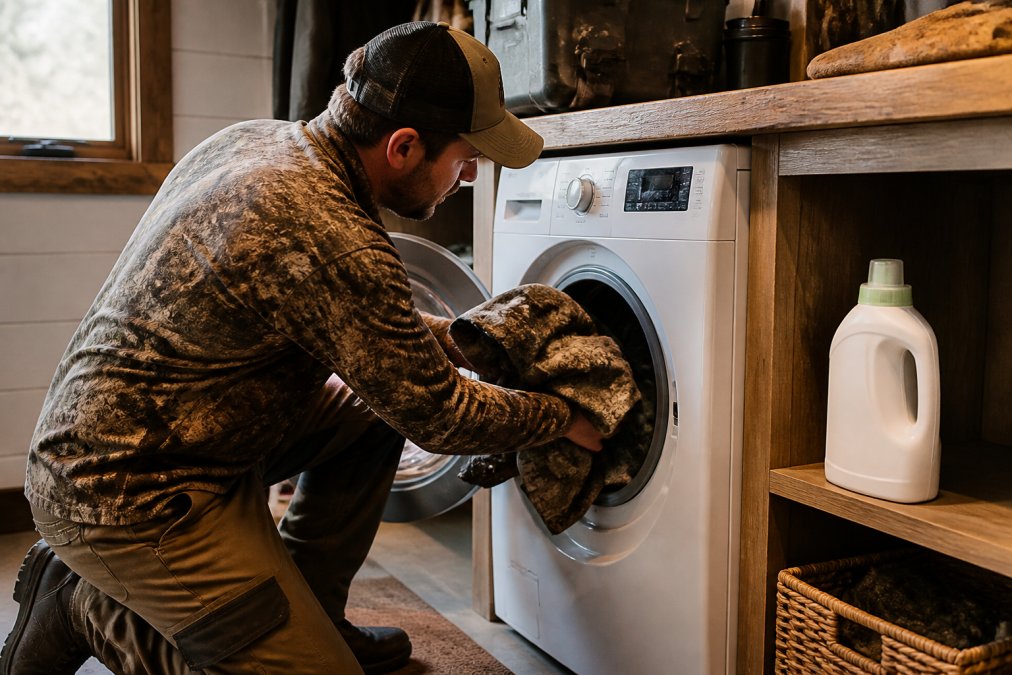
Step 1: Sort and Pre-Treat Stains
Separate hunting clothes from all household laundry. Sort by fabric type: base layers and moisture-wicking synthetics, mid-layers and fleece, outer-layer gear including waterproof shells, and wool items.
For blood stains, mud, or field debris, pre-treat with cold water immediately. Hot water sets protein-based stains permanently. Apply scent-free detergent directly to the stain, work it in gently with rubber gloves, and let sit for 10-15 minutes. Baking soda paste works well on stubborn organic stains and helps with odor elimination.
Avoid enzyme-based cleaners on wool or down-insulated gear, as they degrade protein fibers over repeated use.
Step 2: Choose the Right Wash Cycle and Water Temperature
Cold water on a gentle cycle handles most hunting gear correctly. Cold water prevents shrinkage in wool and base layers, protects DWR coatings on waterproof gear, and reduces damage to moisture-wicking fabrics.
Use minimum effective detergent. Excess detergent leaves residue that traps odors and degrades breathable membranes. For heavily soiled gear, run a second rinse cycle to ensure no detergent residue remains in synthetic fabrics.
Never use fabric softener. It destroys moisture-wicking properties and introduces heavy perfume scents nearly impossible to fully remove.
Step 3: Dry Without Introducing Scent Contamination
Air dry is the gold standard. Hang clothes outside in a clean environment away from vehicle exhaust, grills, or household chemicals. Outdoor air drying provides mild UV exposure that helps eliminate residual odors.
If you must use a dryer, tumble dry on the lowest heat setting only. High heat degrades DWR coatings, damages elastic in base layers, and causes delamination in waterproof gear. Use only scent-free dryer sheets formulated without UV brighteners or perfumes.
Never dry hunting clothes in the same load as household laundry or in a dryer that just finished a perfumed load without running an empty cycle first.
Choosing the Best Scent-Free Laundry Detergent for Hunting Clothes
The wrong detergent wipes out everything else you do right. Most household detergents contain synthetic fragrances and UV brighteners that work against hunters.
UV brighteners are optical whitening agents that make clothes appear brighter under visible light. Many animals, including deer, can see into the ultraviolet spectrum. Clothes washed in standard detergent will glow to a deer's eyes. As documented in research on ungulate UV vision from the American Optical Society, deer have demonstrated sensitivity to UV wavelengths outside human visible range.
A good scent-free detergent will state explicitly: no UV brighteners, no perfumes, no dyes.
What to look for on the label:
| Feature | Why It Matters |
|---|---|
| No UV brighteners | Prevents clothes from glowing under UV light visible to game |
| No synthetic fragrance | Eliminates scent masking failure |
| No dyes | Reduces residue affecting fabric performance |
| pH-neutral formula | Protects DWR coatings and breathable membranes |
| Cold-water effective | Ensures cleaning power without heat damage |
Baking soda is a useful supplement. Adding half a cup to a wash cycle neutralizes acidic odors and enhances odor elimination performance of scent-free detergent.
Handling Specialized Fabrics: Wool, Base Layers, and Scent-Lock Gear
Different fabrics need different treatment.
Wool: Merino wool base layers resist odor better than most synthetics because bacteria growth is slower on wool fiber. Use dedicated wool detergent that is also scent-free. Cold water only, gentle cycle, and always air dry flat or hang dry. Never wring wool or put it in a hot dryer.
Synthetic base layers: Polyester and nylon moisture-wicking base layers trap odor-causing bacteria in the fiber structure. These benefit from cold water washing after every use. Air drying is strongly preferred.
Scent-lock gear: Scent-lock technology uses activated carbon embedded in fabric to absorb odor molecules. Washing incorrectly degrades the carbon layer. Follow manufacturer's care instructions precisely. Most scent-lock gear requires periodic reactivation by tumble drying on medium heat for 30-40 minutes to restore absorption capacity.
DWR-coated outer-layer gear: Residual detergent buildup is the main cause of DWR failure. Use minimal scent-free detergent, run an extra rinse cycle, and tumble dry on low heat to reactivate the DWR coating. According to fabric care guidance from the Outdoor Gear Lab, heat is necessary to reactivate DWR treatments after washing, but excessive heat degrades the coating permanently.
How to Store Hunting Clothes to Prevent Scent Contamination
Proper storage is where most hunters lose gains made in the wash. Clean hunting clothes left hanging in a closet next to regular clothes absorb household odors within days.
The right approach:
- Allow all hunting gear to fully air dry before storage
- Store in sealed plastic totes or heavy-duty zip lock bags
- Keep totes in a scent-controlled environment away from the garage, kitchen, or areas with strong odors
- Add natural cover scents if appropriate: cedar chips, pine needles, or dirt from your hunting property
- Never store hunting clothes with rubber boots, gasoline-exposed gear, or cooking equipment
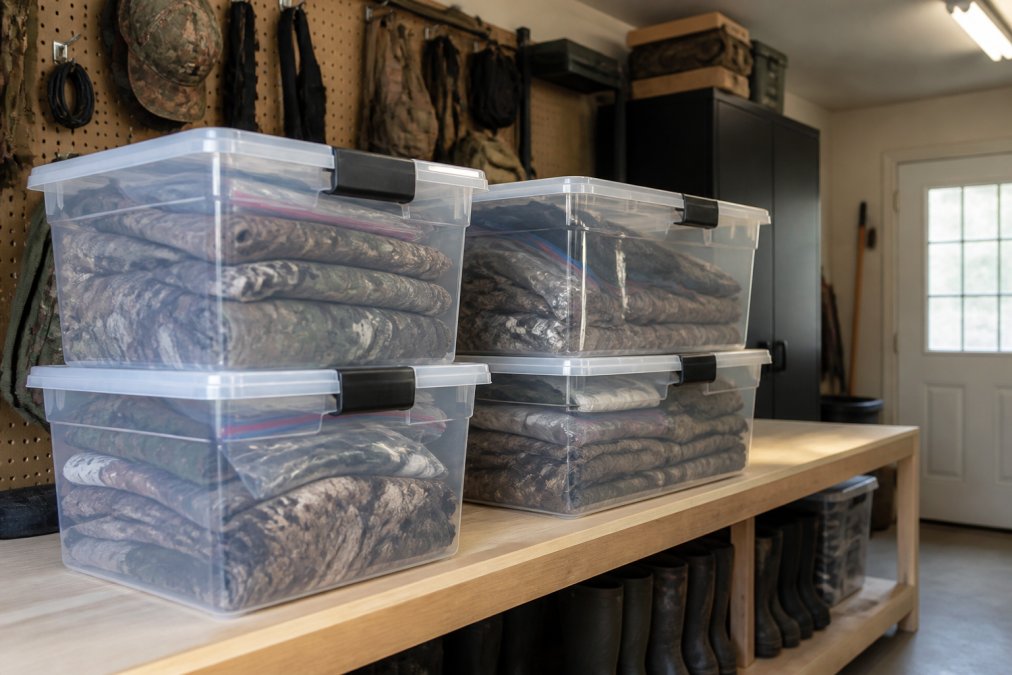
A sealed plastic tote stored in a basement or mudroom away from cooking and vehicle smells is sufficient for most hunters. The key is isolation from scent contamination sources.
Common Washing Mistakes That Blow Your Cover
Washing hunting gear with household laundry. This is the single most common mistake. Even one cycle mixed with perfumed clothing transfers enough fragrance residue to alert game at close range.
Using standard detergent "just this once." UV brighteners from a single wash persist through multiple subsequent washes with scent-free detergent.
Skipping the machine cleaning step. A drum coated in fabric softener residue deposits scent onto hunting clothes regardless of detergent used.
Over-drying with high heat. High heat kills DWR coatings, damages breathable membranes, and degrades elastic in base layers.
Touching clean gear with bare hands. Human hand scent transfers easily. Wear rubber gloves when handling clean hunting clothes.
Storing in non-sealed containers. Even a clean garage has enough ambient odor to contaminate hunting clothes stored in open bins.
Seasonal Maintenance: Keeping Gear Fresh Year-Round
Hunting gear care is not a once-a-season task. A simple seasonal schedule keeps everything in top condition.
Pre-season (4-6 weeks before opening day):
- Inspect all gear for damage, worn seams, and fading
- Wash all hunting clothes using the full scent-free process
- Reactivate scent-lock garments if applicable
- Re-treat DWR-coated outer layers if water is no longer beading
- Restock scent-free detergent and baking soda supplies
During season (after each hunt):
- Air out base layers and mid-layers immediately after returning
- Spot clean mud and blood before it sets
- Wash after every 2-3 uses at minimum, or immediately after heavy sweating
Post-season:
- Wash all gear thoroughly before long-term storage
- Inspect for damage needing repair
- Store in sealed plastic totes in a cool, dry location
- Do not store with mothballs or cedar blocks with strong artificial scents
Scent-free detergents formulated for hunting are generally phosphate-free and less chemically intensive than standard detergents. Many are biodegradable, which matters when rinsing gear near natural water sources. Proper washing and storage extends gear life significantly by preventing premature breakdown of technical fabrics, waterproof coatings, and insulation.
Keeping hunting gear scent-free is a discipline that pays off every time a deer walks into range without flagging. The challenge is staying consistent across every step, from detergent choice to the tote you seal before leaving the house. At Backwater Outfitters, we build apparel for hunters who take every advantage seriously, gear designed to hold up through hard seasons and careful care. Subscribe to our emails for seasonal gear tips, field-tested advice, and updates on new apparel built for the way you actually hunt.
Frequently Asked Questions
Are you supposed to wash hunting gear?
Yes, washing hunting gear before every season and regularly during it is essential. Human odor builds up from sweat and bacteria growth on fabric fibers, and deer and other game can detect it from hundreds of yards away. Washing with a scent-free detergent removes odor-causing bacteria and residue that standard detergents leave behind. Skipping washes doesn't preserve scent control, it destroys it.
Can you use regular laundry detergent on hunting gear?
Regular detergents are a poor choice for hunting clothes. Most contain UV brighteners that make fabric glow under ultraviolet light, exactly what deer see. They also contain synthetic fragrances that linger in fabric fibers and alert game animals long before you're in range. A scent-free laundry detergent formulated specifically for hunting gear eliminates both problems and won't break down DWR coatings on outer-layer gear.
Should I wash my hunting clothes in baking soda?
Baking soda works as a deodorizing booster when added to a scent-free wash cycle, about half a cup in the drum helps neutralize odors that detergent alone misses. It's especially useful for base layers after heavy use. Baking soda won't replace a proper scent-free detergent, but used together, the two do a more thorough job of eliminating odor-causing bacteria from moisture-wicking and synthetic fabrics.
How do you dry hunting clothes to keep them scent-free?
Air drying is the safest method, hang clothes outdoors away from grills, vehicles, and other odor sources, or hang dry them inside in a clean room. If you use a dryer, skip dryer sheets entirely since they contain heavy fragrances. Use the lowest heat setting to protect DWR coatings and breathable membranes. Once dry, store gear immediately in sealed plastic totes or zip lock bags to prevent cross-contamination from household scents.
This article was written using GrandRanker