
Rugged Off-Road Riding Apparel A 2026 Guide
Rugged Off-Road Riding Apparel A 2026 Guide
Table of Contents
- Why Proper Off-Road Riding Apparel Matters
- Essential Off-Road Safety Equipment You NeedFull-Face Helmets and Head ProtectionChest Protectors and Body ArmorGoggles and Eye Protection
- Durable Dirt Bike Apparel Materials That Hold UpHigh-Denier Fabrics and Abrasion ResistanceBreathable Mesh and Moisture-Wicking TechnologyReinforced Stitching and Chassis Construction
- How to Choose Off-Road Riding Boots for Terrain and ProtectionBoot Height and Ankle SupportSole Grip and Off-Road Terrain Compatibility
- Jerseys, Pants, and Weather Protection LayeringEnduro vs. Motocross Gear RequirementsGear for Extreme Heat and Humidity
- Off-Road Gear Maintenance Tips and CareCleaning Technical Fabrics Without DamageDurable Water Repellent Treatments and Longevity
- Sustainability and Repairability in Off-Road Apparel
- Conclusion
Last Updated: August 12, 2026
Why Proper Off-Road Riding Apparel Matters
When you're tearing through trails on a dirt bike or navigating rough terrain in an ATV, your gear isn't just about comfort, it's your first line of defense against serious injury. Off-road riding exposes you to unique hazards: roost from other riders, rocks, branches, and the constant threat of impact during chaotic crashes. Unlike street riding, where crashes happen at predictable angles, trail crashes come from multiple directions. Your gear needs to absorb punishment while staying comfortable enough that you'll actually wear it for hours.
At Backwater Outfitters, we understand that outdoor enthusiasts need apparel that can handle the demands of real adventure. Whether you're an enduro competitor, a weekend trail rider, or someone who loves the freedom of off-road exploration, your gear choices directly affect your safety and enjoyment. Below, we'll walk you through exactly what essential off-road safety equipment you need, the materials that actually hold up to abuse, and how to maintain your investment so it lasts season after season.
Essential Off-Road Safety Equipment You Need
The foundation of any proper off-road riding setup starts with safety gear. Every piece serves a specific purpose, and skipping any component leaves you vulnerable.
Full-Face Helmets and Head Protection
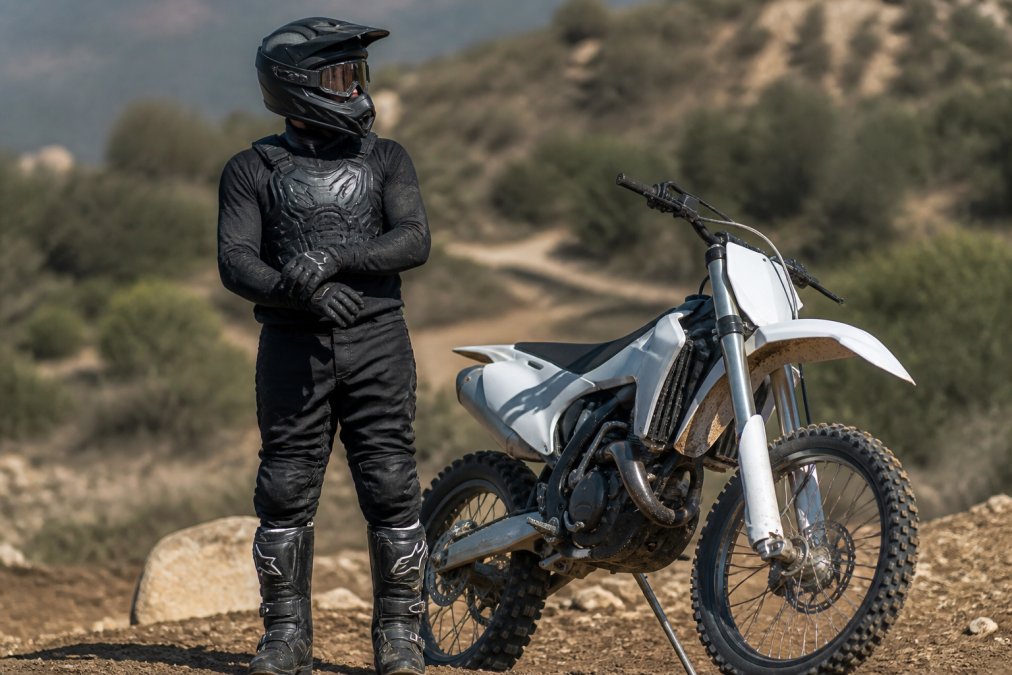
A full-face helmet is non-negotiable for off-road riding. Your head is irreplaceable, and the speeds involved in trail riding demand complete protection. A quality full-face helmet covers your entire skull, jaw, and face, areas that take the most punishment in crashes.
Look for helmets with proper ventilation to prevent heat buildup and moisture-wicking padding that keeps your head cool. Most serious off-road helmets include removable, washable liners. The shell construction matters too: polycarbonate offers good impact resistance, while fiberglass shells provide superior durability for riders who crash frequently.
Check that your helmet meets DOT or Snell certification standards, which verify rigorous impact absorption testing. Goggle integration is another critical feature, your helmet should have a proper goggle pocket that accommodates eye protection without creating pressure points.
Chest Protectors and Body Armor
Impact resistance becomes essential once you're moving fast over unpredictable terrain. Chest protectors shield your ribs, sternum, and vital organs from blunt-force trauma using rigid plastic shells over foam padding.
Look for CE-certified body armor that covers your entire torso, front, back, and sides. Many riders prefer integrated chest protectors built into riding jerseys for seamless protection and better comfort during long rides. The fit matters as much as the protection level: armor should feel snug but not suffocating, allowing full range of motion for your arms and shoulders.
Goggles and Eye Protection
Goggles protect your eyes from roost, dust, branches, and UV radiation. Choose goggles with UV-blocking lenses and anti-fog coatings, fogging is a serious safety issue that prevents you from seeing the trail safely.
Quality goggles feature dual-pane lenses or special lens treatments that prevent condensation buildup. The frame should integrate smoothly with your helmet's goggle pocket, and adjustable straps should prevent shifting even when you're sweating heavily.
Durable Dirt Bike Apparel Materials That Hold Up
The materials in your off-road riding apparel determine how well your gear protects you and how long it lasts. Quality materials survive multiple seasons of hard use.
High-Denier Fabrics and Abrasion Resistance
Denier refers to the weight and thickness of fabric fibers. Higher-denier materials are more durable and resistant to tearing and abrasion. When you slide across gravel or rocks, a high-denier fabric can mean the difference between a small hole and complete destruction of your gear.
Look for jerseys and pants made from 600-denier or higher materials. Reinforced stitching works hand-in-hand with high-denier fabrics, look for double or triple stitching at stress points like seams, pockets, and cuff areas.
Breathable Mesh and Moisture-Wicking Technology
Breathable mesh panels allow air circulation while maintaining protection. Many quality jerseys feature mesh construction in high-heat areas like the chest and underarms, with reinforced fabric in impact zones.
Moisture-wicking technology pulls sweat away from your skin and allows it to evaporate quickly. Synthetic fibers like polyester perform better than cotton, which absorbs sweat and holds it against your skin. The best off-road apparel combines high-denier protective fabrics with breathable mesh strategically placed for ventilation.
Reinforced Stitching and Chassis Construction
Quality gear uses reinforced stitching at all stress points and areas prone to tearing. Polyester thread is stronger and more durable than cotton thread. Look at how seams are finished, sealed or taped seams prevent fraying and extend the life of your gear. Some premium jerseys and pants feature triple-stitched seams that withstand significant stress without coming apart.
How to Choose Off-Road Riding Boots for Terrain and Protection
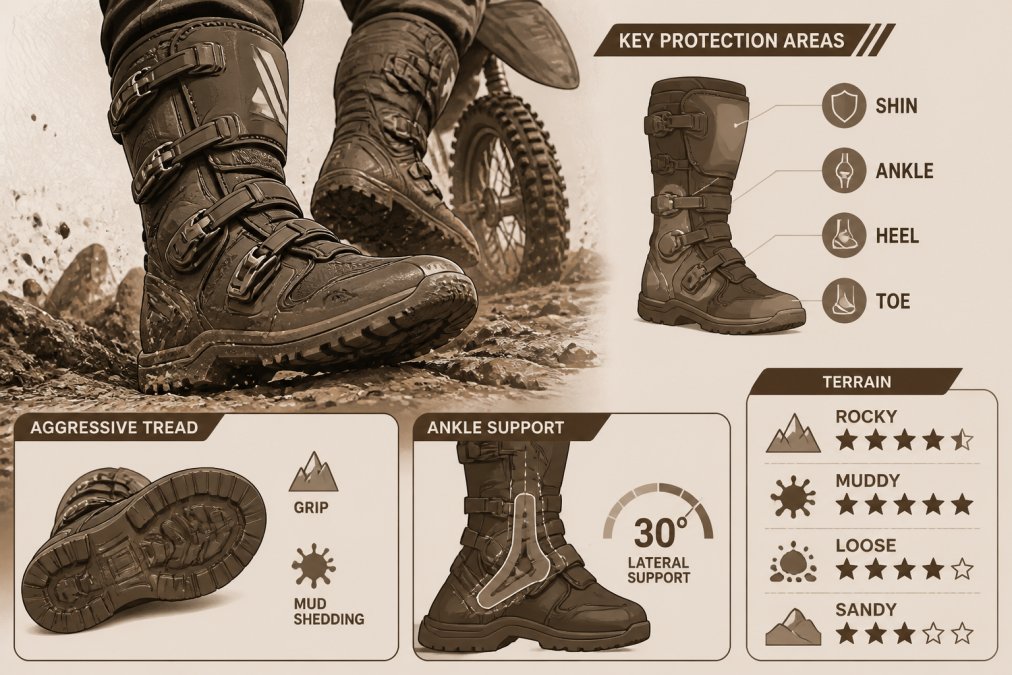
Your boots are the foundation of your setup. They protect your feet and ankles from impact, heat, and sharp objects while providing the grip and support you need to control your bike effectively.
Boot Height and Ankle Support
Boot height directly affects ankle protection. Full-height boots that extend above your ankle provide superior support compared to low-cut designs. Your ankles are vulnerable to twisting injuries during crashes, and a tall boot prevents excessive ankle movement that could cause sprains or fractures.
Look for boots with reinforced ankle cups that provide lateral support without restricting your ability to operate foot controls. The shaft should be rigid enough to prevent excessive bending but flexible enough to allow normal foot movement for throttle and brake control.
Sole Grip and Off-Road Terrain Compatibility
The sole is your connection to the bike. Aggressive tread patterns provide better grip on footpegs, especially when your feet are muddy or wet. Quality off-road boots use rubber compounds formulated for grip on both natural terrain and motorcycle hardware.
Consider the sole thickness and rigidity. A thicker sole provides better protection from sharp rocks and hot engine components. A rigid sole supports your foot during hard braking and acceleration without flexing excessively.
Jerseys, Pants, and Weather Protection Layering
Your jersey and pants are the outer layer of your protection system. They need to provide abrasion resistance while managing moisture and temperature.
Enduro vs. Motocross Gear Requirements
Enduro riding and motocross have different demands on your gear. Motocross happens on closed tracks with predictable terrain, allowing for lighter, more flexible gear optimized for maximum mobility. Enduro involves longer distances over varied terrain, rocky, rooty, muddy, requiring more durable, heavier-duty apparel.
Enduro gear tends to feature more reinforced panels and higher-denier fabrics throughout. If you're doing long trail rides mixing slow technical sections with faster open terrain, enduro-style gear is the better choice. If you're mostly doing short, intense sessions on prepared terrain, motocross gear works fine.
Gear for Extreme Heat and Humidity
Riding in hot, humid conditions requires special consideration. Look for jerseys with extensive mesh panels and minimal solid fabric. Some jerseys feature mesh construction across 60-70% of the garment, with reinforced panels only where crashes are likely.
Lighter colors reflect heat better than dark colors. A white or light gray jersey stays noticeably cooler than black gear in direct sunlight. Consider layering options: a thin, breathable base layer under your jersey can improve moisture management by wicking sweat away from your skin more effectively than a single thick layer.
Off-Road Gear Maintenance Tips and Care
Your gear is an investment. Proper maintenance extends its life and keeps it performing at its best.
Cleaning Technical Fabrics Without Damage
Most off-road gear can be machine washed on a gentle cycle with cold water. Use mild detergent designed for technical fabrics and avoid bleach and fabric softeners, which break down protective coatings. Zip all pockets and close all velcro strips before washing. Turn jerseys inside out to protect graphics and reduce fading. Hang your gear to air dry instead of using the dryer, which damages elastic and can melt synthetic materials.
Durable Water Repellent Treatments and Longevity
Durable water repellent (DWR) coatings eventually wear off with repeated washing and use. When water stops beading on your jacket and starts soaking in, it's time to reapply DWR treatment. You can purchase DWR treatment products designed for technical fabrics and apply them at home following the product instructions.
Reapplying DWR every 2-3 seasons keeps your gear water-resistant and extends its lifespan. Store your gear in a cool, dry place away from direct sunlight, which fades colors and degrades synthetic materials over time.
Sustainability and Repairability in Off-Road Apparel
Quality gear is worth repairing rather than replacing. Many manufacturers design their apparel with repairability in mind.
Small tears and holes can be patched using adhesive patches designed for technical fabrics. For larger damage, professional repair services can replace sections of fabric or reinforce weak areas. A jersey with a torn seam can be re-stitched for a fraction of the replacement cost. Consider the durability and repairability when choosing your initial gear, apparel designed to last and be repaired is ultimately more sustainable than cheap gear that falls apart after one season.
Choosing the right rugged off-road riding apparel means investing in your safety and comfort out on the trail. From full-face helmets and chest protectors to durable high-denier fabrics and quality boots, every component plays a role in your protection. Backwater Outfitters offers apparel specifically designed for riders who demand gear built to survive real adventure, comfortable enough for all-day rides, durable enough for crashes, and backed by a community of outdoor enthusiasts who know what actually works. Start with the essentials, invest in quality construction, and maintain your gear properly. Your future self will thank you when that gear saves you from serious injury.
| Gear Component | Primary Purpose | Key Feature to Prioritize |
|---|---|---|
| Full-Face Helmet | Head and face protection | CE/DOT certification, ventilation |
| Chest Protector | Torso and organ protection | Rigid shell with foam padding |
| Goggles | Eye protection from roost and UV | Anti-fog coating, secure fit |
| Jersey | Abrasion resistance and ventilation | High-denier fabric with mesh panels |
| Pants | Leg protection and durability | Reinforced stitching, impact panels |
| Off-Road Boots | Ankle support and foot protection | Full height, aggressive sole tread |
| Gloves | Hand protection and grip | Impact padding, reinforced palms |
Frequently Asked Questions
What should off-road riders always wear for safety?
Off-road riders must wear a full-face helmet with impact absorption, goggles for eye protection, a chest protector or body armor, reinforced gloves, durable riding pants with roost protection, and specialized boots with ankle support. Each piece protects against specific hazards: helmets prevent head injuries from impacts and roost, goggles shield eyes from debris and sun, body armor absorbs impact from falls, and boots protect feet and ankles on rough terrain. Proper off-road riding apparel significantly reduces injury severity in crashes.
What are the most durable materials for off-road riding apparel?
High-denier fabrics (typically 500D and above) offer the best abrasion resistance for off-road riding apparel. Look for reinforced stitching, impact-resistant panels in high-contact areas, and breathable mesh sections for ventilation. Durable water repellent coatings protect against mud and moisture without sacrificing breathability. CE-certified materials meet safety standards for impact absorption and thermal regulation, ensuring gear holds up through multiple seasons of hard use on dirt bikes, ATVs, and trail riding.
How do I maintain my off-road riding gear to extend its lifespan?
Clean technical fabrics by hand or on a gentle cycle with cold water, avoiding harsh detergents that damage durable water repellent treatments. Air dry completely before storing. Inspect reinforced seams and stitching regularly for damage. Reapply durable water repellent treatments annually to maintain weather protection. Store gear in a cool, dry place away from direct sunlight. Repair small tears or separated seams promptly to prevent further damage. Proper maintenance keeps your apparel functional and extends its durability through multiple seasons.
What's the difference between motocross and trail riding apparel?
Motocross apparel prioritizes impact protection and ventilation for high-speed competition, with lighter, more articulated fits and aggressive roost protection. Trail and enduro apparel emphasizes durability, weather protection, and layering options for varied terrain and longer ride times. Motocross gear uses more breathable mesh for cooling, while trail gear includes heavier fabrics and reinforced panels for abrasion resistance. Both require full-face helmets and body armor, but trail riders benefit from gear designed for thermal regulation across changing conditions and extended exposure to rough off-road terrain.
This article was written using GrandRanker