
Best Hunting Gear for Humidity A 2026 Guide
Best Hunting Gear for Humidity A 2026 Guide
Table of Contents
- Why Humidity Demands Different Hunting Gear
- Moisture-Wicking Hunting Shirts: The Foundation of Heat Management
- How to Stay Cool While Hunting in High HeatLayering for Ventilation and Sun ProtectionBreathability and Airflow Design in Humid Conditions
- Breathable Hunting Boots for Swampy Terrain
- Top Moisture-Wicking Shirts for Humid Hunting1. Backwater Outfitters Dirty Tires Good Times Moisture-Wicking Tee2. Backwater Outfitters Off-Road Tee for Breathable Comfort3. Backwater Outfitters Vintage Sunset T-Shirt
- Essential Features for Humidity Hunting GearUPF Rating and Sun ProtectionOdor Control and Antimicrobial TreatmentsLightweight Material Construction
- Maintenance and Care for Technical Hunting Fabrics
- Conclusion
Last Updated: August 19, 2026
Why Humidity Demands Different Hunting Gear
Hunting in humid conditions requires gear that standard outdoor apparel can't deliver. When moving through swamps or dense forest in high heat and moisture, your body generates significant sweat while the environment prevents natural evaporation. This traps heat against your skin and accelerates odor development that compromises concealment.
Standard cotton absorbs sweat and holds it, making you heavier and colder when you stop moving. Moisture-wicking hunting shirts pull sweat away from your skin to the outer fabric surface where it evaporates, keeping you dry and regulating core temperature. For early season hunting at 70-85°F with humidity above 70%, this distinction determines whether you stay comfortable for eight hours or abandon your hunt after three.
Backwater Outfitters designs gear specifically for these conditions. Our moisture-wicking shirts combine lightweight construction with breathability that prevents clammy moisture buildup. Your complete humidity hunting setup needs boots that drain water without sacrificing support, layering options that add sun protection without trapping heat, and fabrics treated for odor control.

Moisture-Wicking Hunting Shirts: The Foundation of Heat Management
A moisture-wicking hunting shirt is your humidity hunting foundation. These shirts use synthetic or synthetic-blend fabrics engineered to pull sweat away from your skin and move it across the fabric surface for rapid evaporation. A cotton shirt becomes progressively heavier as it absorbs sweat, while a moisture-wicking shirt stays light and dry against your body.
The best moisture-wicking hunting shirts combine three technical features: fibers with low absorbency (polyester or merino blends), fabric structure with microscopic channels that move moisture outward through capillary action, and ventilation panels in high-sweat zones like the back and underarms.
Weight matters significantly in humid conditions. A lightweight shirt at 3.8-4.2 ounces per square yard stays comfortable during active movement and doesn't create bulk under a camo jacket. Articulated side seams maintain shape during movement and prevent bunching that traps heat, while reinforced double-needle hems add durability without significant weight.
How to Stay Cool While Hunting in High Heat
Staying cool while hunting in high heat requires combining fabric choice, layering strategy, and hydration management. Start with a moisture-wicking base layer that handles sweat transport, then add strategic sun protection without trapping heat.
Layering for Ventilation and Sun Protection
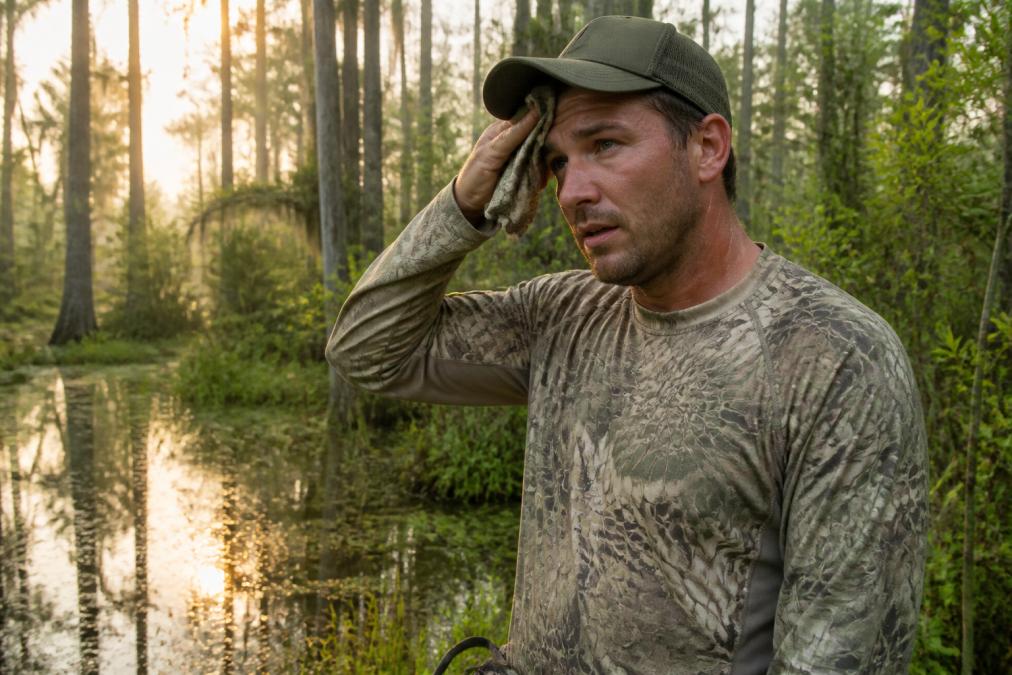
Layering in humid conditions differs fundamentally from cold-weather layering. You're creating airflow paths that allow sweat evaporation while protecting exposed skin from UV damage. Your first layer is a moisture-wicking shirt. Your second layer should be optional: a lightweight long-sleeve shirt or arm sleeves providing UPF sun protection without creating a sealed thermal layer.
Long sleeves seem counterintuitive in heat, but they improve cooling when constructed from breathable, quick-dry fabrics. A long-sleeve moisture-wicking shirt creates an air gap between fabric and skin, allowing evaporative cooling while blocking UV exposure. The key is choosing sleeves with mesh panels or open-weave construction prioritizing airflow. Avoid layering that seals air against your body; instead, choose a fitted moisture-wicking base that moves sweat outward, then add a looser outer layer with ventilation panels.
Breathability and Airflow Design in Humid Conditions
Breathability refers to a fabric's ability to allow water vapor to pass through while blocking liquid water. Look for fabrics with durable water-repellent (DWR) treatments that shed light rain without creating a moisture barrier. The DWR coating sits on the fabric surface without blocking pores beneath, allowing sweat to escape even when the outer surface repels water.
Ventilation design complements breathability. Mesh panels in the back, underarms, and sometimes the chest provide direct airflow to high-sweat zones. These panels are typically covered by your pack or camo jacket, so they don't compromise concealment while significantly improving cooling. Effective ventilation panel placement puts mesh in the mid-back where your pack sits and under the arms where sweat production peaks.
Breathable Hunting Boots for Swampy Terrain
Your boots are the second critical humidity hunting component. In swampy terrain, you're managing water that gets inside while maintaining drainage and preventing moisture buildup that causes blisters and fungal issues.
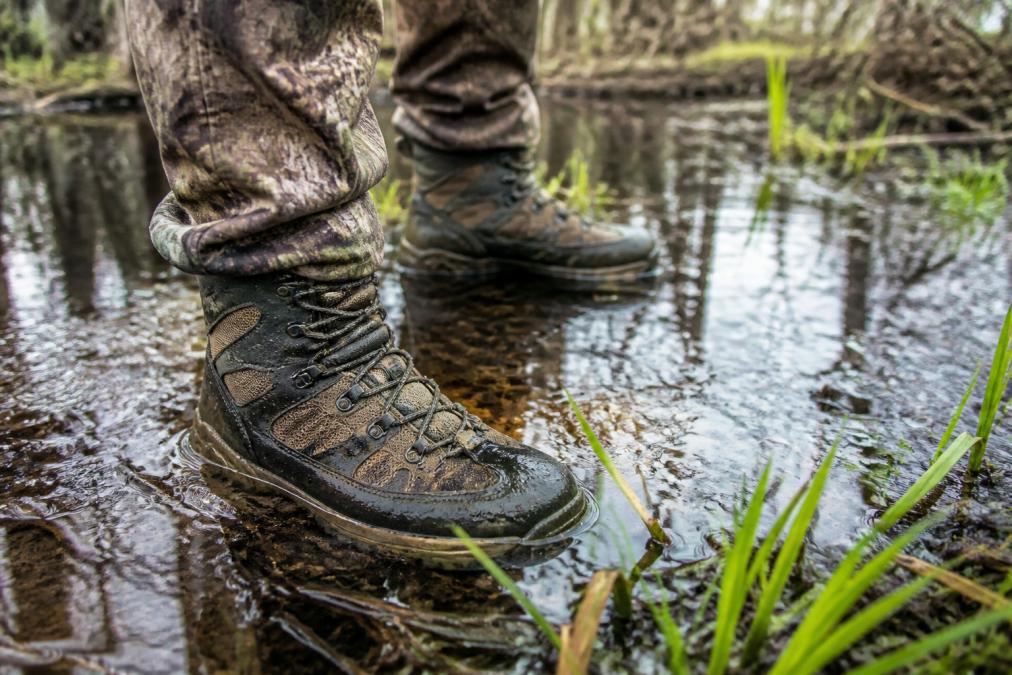
Breathable boots for swampy hunting use mesh panels combined with hydrophobic linings that allow water drainage without trapping moisture. When you step in water, the boot drains quickly rather than holding water against your foot. Mesh construction allows air circulation that dries the boot interior faster than sealed waterproof designs.
Look for boots with mesh venting on the sides and top collar backed by a hydrophobic membrane that prevents mud and debris from entering while allowing water drainage. Sole construction matters equally; aggressive tread patterns include drainage channels that shed water rather than trapping it. Weight becomes significant when moving through swamps, a lightweight breathable boot at 2-2.5 pounds per pair stays comfortable during all-day hunts while heavier waterproof boots cause fatigue and increase blister likelihood.
Insoles in breathable boots should be removable for drying. After a day in swampy terrain, pull insoles out and allow them to air dry completely before the next hunt.
Top Moisture-Wicking Shirts for Humid Hunting
1. Backwater Outfitters Dirty Tires Good Times Moisture-Wicking Tee
The Backwater Outfitters Dirty Tires Good Times Moisture-Wicking Tee ($32.99) delivers core humidity hunting features at an accessible price point. This shirt uses 100% polyester at an extra-light 3.8 ounces per square yard, making it one of the lightest options available. Minimal heat retention occurs even during active movement in high humidity.
The shirt includes reinforced double-needle sleeve and bottom hems that hold up to rough terrain and repeated washing. Side seams provide structured fit that prevents bunching during movement. Direct-to-film (DTF) graphics stay vibrant through multiple wash cycles without cracking or peeling. The tear-away label eliminates neck irritation during long field days.
2. Backwater Outfitters Off-Road Tee for Breathable Comfort
The Backwater Outfitters Off-Road Tee ($31.99) uses 100% Airlume combed ring-spun cotton at 4.2 ounces per square yard, offering a different approach than pure synthetic shirts. This cotton blend maintains breathability while providing the comfort feel many hunters prefer over fully synthetic fabrics. Shoulder tape prevents stretching during movement, and side seams maintain shape retention through repeated wear and washing. The tear-away label addresses the common complaint about standard garment tags irritating your neck during long hunting days. This shirt is ethically manufactured.
3. Backwater Outfitters Vintage Sunset T-Shirt
The Backwater Outfitters Vintage Sunset T-Shirt ($28.99) uses 100% ring-spun cotton at 153 grams per square meter, making it the heaviest option but still lightweight for cotton construction. This shirt prioritizes comfort and aesthetic appeal over maximum moisture-wicking performance. The tubric knit construction eliminates side seams, creating a cleaner drape. The ribbed collar and shoulder tape maintain shape through multiple washes and field use. The DTG (direct-to-garment) chest print keeps graphics crisp without the bulk that screen printing adds.
| Shirt | Weight | Material | Price | Best For |
|---|---|---|---|---|
| Dirty Tires Good Times | 3.8 oz/yd² | 100% Polyester | $32.99 | Lightest, fastest-drying option |
| Off-Road Tee | 4.2 oz | Cotton blend | $31.99 | Comfort-focused hunters |
| Vintage Sunset | 153 g/m² | 100% Cotton | $28.99 | Budget-conscious, general use |
Essential Features for Humidity Hunting Gear
UPF Rating and Sun Protection
UPF (Ultraviolet Protection Factor) rating indicates how effectively a fabric blocks UV radiation. A UPF 50+ shirt blocks 98% of UV rays, protecting your skin from sun damage that accelerates fatigue and heat stress during long hunting days. Many moisture-wicking fabrics naturally provide UPF protection due to their tight weave and synthetic composition. Cotton provides minimal UPF protection unless chemically treated, which is why many humid-climate hunters choose synthetic or synthetic-blend shirts offering both moisture-wicking and sun protection.
Odor Control and Antimicrobial Treatments
Odor develops when bacteria colonize sweat-dampened fabric. Moisture-wicking shirts with antimicrobial treatments resist bacterial growth even after multiple days of wear, extending the usable period between washes. Antimicrobial treatments work through silver-ion technology, copper-based compounds, or chemical treatments that inhibit odor-causing bacteria. Test antimicrobial effectiveness by wearing the shirt in humid conditions and assessing odor development after 24-48 hours.
Odor development also depends on storage. Air dry your hunting shirts completely before storing them in a ventilated space rather than folding them in a closet.
Lightweight Material Construction
Lightweight construction in humidity hunting gear serves multiple purposes. A lighter shirt reduces overall weight you carry when covering miles of swamp terrain. More importantly, lightweight fabrics dissipate body heat more effectively than heavy materials because they have less thermal mass to retain warmth. The balance point for most hunters is 3.8-4.5 ounces per square yard, providing adequate durability while maintaining cooling performance.
Maintenance and Care for Technical Hunting Fabrics
Technical hunting fabrics require specific care to maintain their performance characteristics. Machine wash moisture-wicking shirts in cold water using a gentle cycle. Cold water preserves the fabric's ability to transport moisture and prevents damage to synthetic fibers. Use standard detergent without fabric softeners; softeners coat the fabric and reduce moisture-wicking performance.
Air dry your hunting gear whenever possible. Machine drying degrades synthetic fibers and can damage graphics. For boots, remove insoles and allow them to dry separately from the boot body. Stuff boots with newspaper to absorb interior moisture, replacing it every few hours until completely dry.
Refresh DWR treatments on water-resistant gear annually or when water no longer beads on the surface. Specialized DWR wash-in treatments are available that restore water repellency without professional retreatment. Store humidity hunting gear in a cool, dry location away from direct sunlight. Avoid storing damp gear in sealed containers, which creates conditions for mold and mildew growth.
Hunting in humidity demands gear engineered specifically for moisture management and heat dissipation. Backwater Outfitters moisture-wicking shirts address the core challenge through lightweight construction, breathable fabrics, and ventilation design that standard outdoor apparel can't match. The Dirty Tires Good Times Moisture-Wicking Tee at $32.99 delivers performance features at an accessible price point, making it the practical choice for hunters testing whether technical gear improves their comfort in hot, wet conditions. Pair your shirt choice with breathable boots that drain quickly and maintenance practices that preserve fabric performance, and you'll stay comfortable through full hunting days in humidity that would otherwise force you to abandon your hunt.

American Apparel and Footwear Association fabric performance standards
UPF sun protection guidelines from the Skin Cancer Foundation
Fabric care and synthetic material maintenance from the American Cleaning Institute
Frequently Asked Questions
What is the best fabric for high-humidity hunting?
Synthetic blends and merino wool outperform cotton in humid conditions. Synthetic materials like polyester and nylon offer superior moisture-wicking, evaporative cooling, and quick-dry properties. Merino wool naturally regulates temperature and resists odor, making it excellent for multi-day hunts. Avoid 100% cotton, which absorbs sweat and stays wet. Look for fabrics with a UPF rating of 50+ for sun protection in open terrain.
How do moisture-wicking hunting shirts actually work in hot weather?
Moisture-wicking fabrics pull sweat away from your skin and move it to the outer layer where it evaporates faster. This evaporative cooling process helps maintain body temperature and prevents the clammy feeling of wet cotton. The Backwater Outfitters Dirty Tires Good Times Moisture-Wicking Tee uses 100% polyester at just 3.8 oz per yard, engineered for fast-drying comfort during long hunting days. Quick-dry construction is critical in humidity because wet gear clings to skin and reduces thermoregulation.
What hunting gear features help prevent overheating in humid conditions?
Look for mesh venting panels, articulated fit that allows airflow, and breathable base layers. Lightweight materials under 4.5 oz per yard reduce heat retention. Stretch panels at shoulders and underarms improve mobility and ventilation. Durable water-repellent (DWR) finishes shed sweat without trapping moisture. A wide-brimmed or low-profile cap with breathable mesh underbill keeps sun and sweat off your face. Avoid heavy, layered construction; instead, choose single-layer performance fabrics that breathe.
Are synthetic or natural fibers better for humid hunting?
Synthetics generally outperform natural fibers in humid conditions. Polyester, nylon, and polypropylene blends dry 2-3 times faster than cotton or wool alone. However, merino wool is an exception: it wicks moisture while naturally resisting odor and regulating temperature, making it ideal for multi-day hunts where washing isn't possible. For early season hunting when temperatures spike, synthetic blends offer faster evaporative cooling. Many high-performance hunting shirts combine both: a synthetic base layer with merino wool mid-layers for temperature control.
This article was written using GrandRanker