

UV Protective Clothing: Benefits for Outdoor Adventures
Table of Contents
- Why UV Protective Clothing Matters for Outdoor Enthusiasts
- How UPF Rating Explained: Understanding Sun Protection Standards
- The Real Benefits of Wearing UV Protective Clothing
- UPF Clothing vs Sunscreen: Which Offers Better Protection
- Choosing the Right Sun-Protective Gear for Your Activity
- How to Wash UPF Clothing to Maintain Sun Protection
- Common Mistakes That Reduce UV Protection Effectiveness
- Conclusion
Last Updated: August 22, 2026
Why UV Protective Clothing Matters for Outdoor Enthusiasts
When you're spending eight hours on the water or a full day in the field, sun exposure becomes your biggest health risk. UV protective clothing is your first line of defense against cumulative damage that turns a day of fishing into a decade of photoaging and melanoma risk.
A regular t-shirt offers virtually no protection as UV rays penetrate the weave. UV protective clothing uses tightly woven synthetic fibers and UV-absorbent chemicals engineered to block both UVA and UVB radiation. According to the Skin Cancer Foundation's UV protection guide, prolonged UV exposure significantly increases melanoma risk. UV protective clothing reduces that risk by blocking 95-98% of harmful radiation, depending on the UPF rating (skincancer.org).
If you hunt, fish, or spend serious time outdoors, you're accumulating UV damage whether you feel it or not. Sunburn is the visible symptom. Photoaging is what happens over years. Melanoma is what happens if you're unlucky. UV protective clothing stops all three.
How UPF Rating Explained: Understanding Sun Protection Standards
UPF stands for Ultraviolet Protection Factor and measures how effectively a fabric blocks UV radiation. UPF 50+ blocks 98% of UV rays, while UPF 15 blocks 93%. That extra 5% compounds over a season of outdoor work.
Testing standards are rigorous. ASTM International's UV protection testing standards require laboratories to measure UV transmittance under controlled conditions. A fabric earns a UPF rating only if it consistently blocks the stated percentage across both UVA and UVB wavelengths, called broad-spectrum protection.
UPF is not the same as SPF. SPF measures sunscreen protection; UPF measures clothing protection. They're different scales measuring different things. A UPF 50+ shirt blocks more UV than SPF 50 sunscreen because fabric creates a physical barrier, while sunscreen absorbs and reflects radiation.
Fabric density determines UPF rating more than anything else. Tightly woven synthetic fibers, polyester, nylon, spandex blends, naturally block more UV than loosely woven cotton. That's why athletic wear designed for water sports typically carries UPF 50+ ratings.
The Real Benefits of Wearing UV Protective Clothing
Melanoma Risk Reduction and Skin Barrier Protection
Melanoma is the fastest-growing cancer in the country, with cumulative UV exposure as the primary cause. Every hour you spend in UV protective clothing is an hour your skin barrier stays intact and protected from the mutation risk that leads to melanoma.
UV rays degrade collagen and elastin in the dermis layer, damage that's permanent. Once degradation occurs, your skin's ability to repair itself diminishes. UV protective clothing prevents that damage from happening in the first place.
A single season of unprotected sun exposure, say, 200 hours of fishing or hunting, exposes your skin to significant cumulative UV dose. Studies on outdoor workers show that unprotected exposure increases melanoma risk substantially, while UV protective clothing worn during those same 200 hours reduces that risk by approximately 95%, according to dermatological research on occupational sun exposure.
Photoaging Prevention and Long-Term Skin Health
Photoaging is what happens when UV radiation damages collagen and elastin that keep skin firm and resilient. A 50-year-old who spent decades in UV protective clothing will have visibly younger skin than a 50-year-old who spent those decades unprotected.
The damage accumulates invisibly. You won't see wrinkles or age spots after one summer, but after ten summers of unprotected exposure, they become visible. UV protective clothing prevents that accumulation by blocking the radiation that causes it.
Moisture-wicking synthetic fabrics used in UV protective clothing also support skin health by reducing sweat buildup and friction. Sweat trapped against your skin creates an environment where sun damage compounds. Breathable UV protective clothing keeps your skin dry and cool while blocking radiation.
UPF Clothing vs Sunscreen: Which Offers Better Protection
Both offer protection, but UV protective clothing wins on every practical metric for outdoor work.
Sunscreen requires reapplication every two hours or immediately after sweating or swimming. Most people apply half the recommended amount and miss spots like the tops of ears, part lines, and the back of the neck. UV protective clothing works the moment you put it on and doesn't degrade with sweat or water.
Sunscreen can irritate sensitive skin during extended outdoor activity when sweat mixes with the product. UV protective clothing doesn't irritate anything. It just blocks radiation.
Sunscreen uses UV-absorbent chemicals that convert radiation into heat and degrade over time. UV protective fabrics use physical blocking through tight weaves and UV-absorbent fibers engineered into the material itself. The protection doesn't degrade.
The practical solution is UV protective clothing for your body and SPF 30+ sunscreen for your face and hands.
Choosing the Right Sun-Protective Gear for Your Activity
Fabric Density, Moisture-Wicking, and Breathability
The best UV protective clothing balances three competing demands: maximum UV blocking, moisture management, and breathability.
Fabric density determines UV blocking, but tight weaves trap heat and moisture. Moisture-wicking technology solves this, synthetic fibers pull sweat away from your skin and move it to the fabric surface, where it evaporates. You get UV protection without sweat buildup.
Breathability measures how much air passes through the fabric. Modern UV protective apparel uses engineered weaves that maintain high density while allowing airflow. You get 98% UV blocking and the ability to cool yourself through evaporation.
After six hours in direct sun, a standard cotton long-sleeve shirt (UPF 5) leaves you soaked and uncomfortable. A UV protective synthetic shirt with moisture-wicking (UPF 50+) keeps you dry and cool while protecting your skin. That's why commercial fishing operations outfit their teams in UV protective gear.
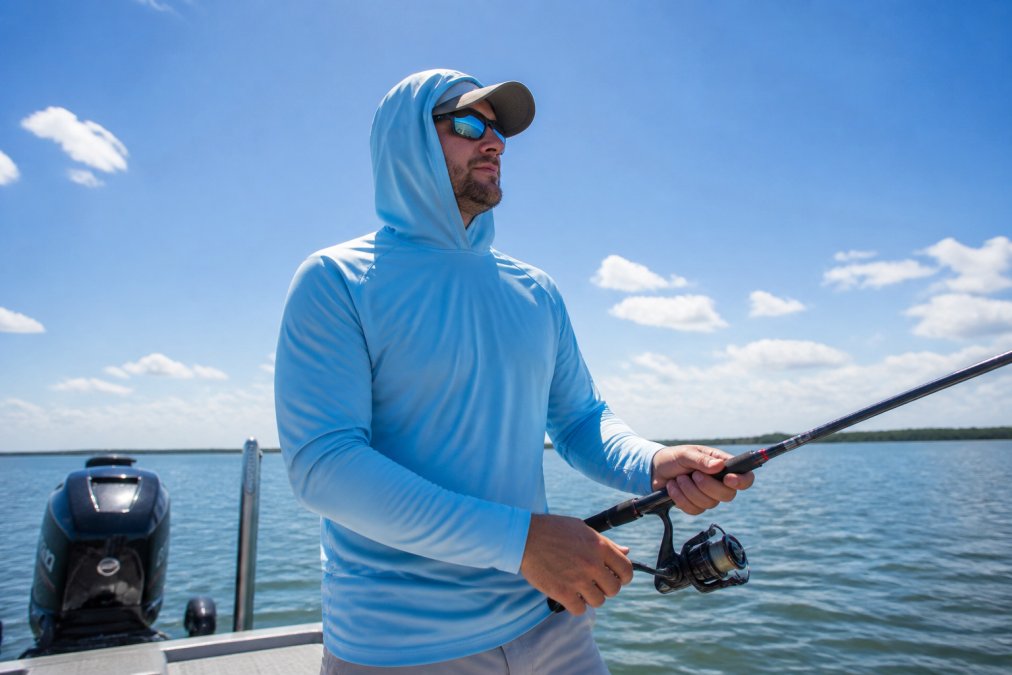
Body Surface Area Coverage and Garment Construction
Coverage matters as much as the fabric itself. A UPF 50+ shirt that leaves your forearms exposed protects your torso but leaves 25% of exposed skin vulnerable.
Long-sleeve shirts and pants are the standard for serious outdoor work. A quality UV protective shirt should have sleeves extending to your wrists and a cut that doesn't ride up when you move. Pants should extend to your ankles.
Seams are weak points. Quality UV protective apparel uses reinforced seams and construction methods that maintain fabric integrity at stress points. A high neckline protects your chest and neck better than a low neckline.
The fit affects both protection and comfort. Clothing that's too tight restricts movement and traps heat. Clothing that's too loose creates gaps where UV rays reach your skin. The best UV protective gear fits snugly enough to maintain coverage but loose enough to allow movement.
How to Wash UPF Clothing to Maintain Sun Protection
UPF ratings are durable but not permanent. Proper care extends the life of your UV protective clothing.
Wash UV protective clothing in cool water with mild detergent. Hot water degrades synthetic fibers and UV-blocking treatments. Use the gentle cycle and avoid bleach and fabric softeners, both compromise UV protection.
Dry UV protective clothing on low heat or air dry. High heat damages synthetic fibers and reduces the fabric's ability to block UV radiation.
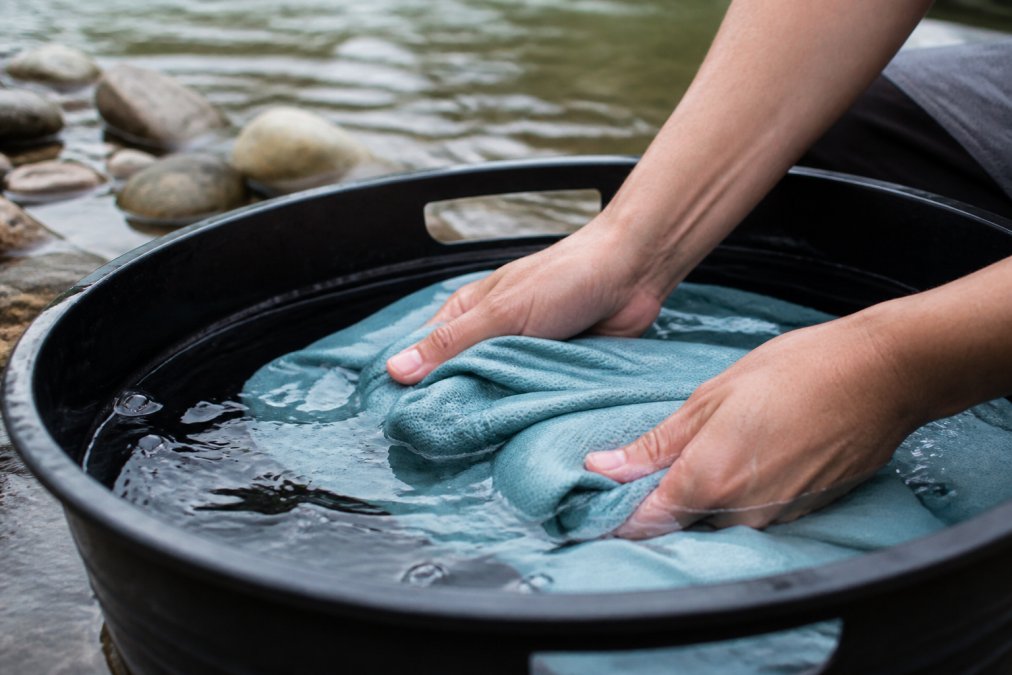
Store UV protective clothing in a cool, dry place away from direct sunlight. UV rays degrade the fabric even when you're not wearing it. Avoid damp basements or hot attics.
Check your UV protective clothing regularly for signs of wear. Pilling, fading, and loose seams reduce effectiveness. Most UV protective garments maintain their rated protection for 50-75 washes if cared for properly, roughly two to three seasons of regular use.
Common Mistakes That Reduce UV Protection Effectiveness
The biggest mistake is assuming any long-sleeved shirt provides UV protection. A loose cotton long-sleeve shirt has a UPF of approximately 5, almost no protection.
Another common mistake is buying UV protective clothing that doesn't fit your activity. The best UV protective clothing is engineered for your specific activity: fishing apparel, hunting apparel, or off-roading apparel.
Underestimating cumulative exposure is serious. One day of fishing isn't a big deal, but fifty days a year for ten years, 500 days of UV exposure, causes photoaging and melanoma risk. UV protective clothing addresses that accumulation.
Many outdoor enthusiasts also forget to protect their neck, ears, and the back of their head, which get significant UV exposure, especially during water activities where light reflects off the water surface. A wide-brimmed hat and UV protective clothing that covers your neck reduce that exposure.
Finally, UV protective clothing loses effectiveness if it's wet and clinging to your skin. Moisture-wicking UV protective clothing solves this by pulling sweat away from your skin.
UV protective clothing isn't an optional accessory for outdoor enthusiasts, it's foundational protection that compounds over years. The difference between a season of unprotected sun exposure and protected exposure is visible within a few years and measurable in melanoma risk over a decade. Backwater Outfitters designs UV protective apparel specifically for hunters, fishermen, and outdoor adventurers who need gear that blocks radiation while performing in demanding conditions. Our long-sleeve shirts and pants use tightly woven synthetic fabrics with moisture-wicking technology, reinforced seams, and construction methods that maintain protection through extended outdoor work. Choose UV protective clothing engineered for your activity, care for it properly, and you're investing in skin health that pays dividends for the rest of your life.
| Aspect | UV Protective Clothing | Sunscreen |
|---|---|---|
| Reapplication | None required | Every 2 hours |
| Coverage consistency | Complete, no missed spots | Prone to missed areas |
| Durability in water | Maintains protection | Washes off |
| Skin irritation risk | None | Possible with chemicals |
| Sweat resistance | Moisture-wicking designs | Degrades with sweat |
| Best for | Long outdoor sessions | Face and exposed areas |
Frequently Asked Questions
Does UV protective clothing actually work?
Yes. UV protective clothing with proper UPF ratings blocks 97-98% of ultraviolet radiation when the fabric has sufficient density and tightly woven construction. Broad-spectrum protection fabrics are tested to meet dermatological health standards and significantly reduce skin exposure compared to regular clothing. Effectiveness depends on the UPF rating, fit, and how well the garment covers body surface area.
What does the UPF rating on clothing mean?
UPF (Ultraviolet Protection Factor) indicates how much UV radiation a fabric blocks. A UPF 50+ rating means the fabric allows only 1/50th of the sun's UV rays to reach your skin, blocking 98% of both UVA and UVB rays. Higher ratings offer marginally better protection, UPF 50+ and UPF 100+ both block 98-99%. The rating reflects the fabric's UV-blocking efficiency based on fiber type, density, and weave construction.
Is it better to wear UPF clothing or sunscreen?
UV protective clothing and sunscreen work best together. UV-protective clothing provides continuous, long-lasting broad-spectrum protection without reapplication and covers large body surface areas efficiently. Sunscreen protects exposed skin and requires reapplication every 2 hours. For outdoor activities lasting hours, fishing, hunting, or off-roading, UV protective clothing reduces sunscreen dependence, prevents photoaging, and lowers melanoma risk more effectively than sunscreen alone.
How do I care for UPF clothing to keep it effective?
Wash UV protective clothing in cool water with mild detergent and avoid fabric softeners or bleach, which can degrade UV-blocking fibers. Air-dry when possible; high heat can damage synthetic fibers that provide sun-shielding. Avoid overexposure to chlorine in pools, which degrades UV-absorbent chemicals. Properly maintained UPF garments retain their sun-protective technology for years, making them a durable investment for outdoor enthusiasts.
This article was written using GrandRanker